Showing posts with label [Garage rock]. Show all posts

24.4.12

Hate-Ashbury, or, War in Peace (What a Funny Combination)

V/A: Hate-Ashbury—Freedom on the RISE, 1965-1970,
vol. 1 [.zip]
vol. 2 [.zip]
vol. 3 [.zip]

(Or, a short sampler of the three volumes:)

With Martha Marcy May Marlene making the cinema rounds, once again that old ghost of the Zeitgeist, Charles Manson, rears his ugly, oddly compelling head. Not that there's anything romantic about a megalomaniacal cult pimp con guru partly responsible for mass murder. Or you could say that's precisely what there is: nothing more than romanticism to his rebel's legend. Chaos does seems to call to us, its sweetly morbid drone always a guilty pleasure (the death drive, blah, blah). But regardless of any juvenile fascination with Manson, there is a legitimately enduring relevance to the whole «Manson Family» tale, and the era it both epitomised and, in a way, put an end to.


Baby boomers, modern day hippies and fancy dress outlets tend to cast the '60s as a time of hit or miss fashion laced with well-meaning, communally held ideals that were scuppered at best, a little naïve at worst—a societal emancipation set to assuaging, innocent music. But if the music wasn't always that soothing, even the gently strummed philosophical lullabies of the age could contain something decidedly raging. Bob Dylan's mystically paranoid «A Hard Rain's a-Gonna Fall» spun apocalyptic visions on the back of the Cuban Missile Crisis. Then there's his pacifist's assault, vicious and vindictive, on the masters of war:
And I hope that you die
and your death'll come soon
I will follow your casket
in the pale afternoon
And I'll watch while you’re lowered
down to your deathbed
And I'll stand o'er your grave
'til I'm sure that you're dead
And that was in 1963. The counter-culture hadn't even begun.


Manson himself sang and wrote songs a lot less vitriolic. They were greatly admired by Neil Young. One was recorded by the Beach Boys. Manson's partner in crime and alpha coyote rival out there in the desert, Orkustra guitarist Bobby «Cupid» Beausoleil, provided the inspiration for the moniker behind his former band Love. That was before he starred in forgotten soft porn classic Ramrodder, scored Kenneth Anger's «Lucifer Rising» and stabbed a kindly music teacher to death. The Buddhist and, according to one true crime writer, «successful bagpipe musician» Gary Hinman had been held hostage in his own home for three days by Beausoleil, Susan Atkins and Mary Brunner. Manson made a short appearance to chop the captive's earlobe off with a machete. Two days later, once Beausoleil had stabbed Hinman twice in the chest, Atkins suffocated him with a pillow, perhaps to stifle his last ditch chanting of «Nam-myo-ho-renge-kyo, nam-myo-ho-renge-kyo…»


Four years earlier, in 1965, Manson hanger-on Catherine «Gypsy» Share, then going under the assumed artist name of Charity Shayne, had released «Ain't It?, Babe», a catchy jingle jangle single cheerily gloating over a former lover's misery. In 1971, she robbed an arms store in a bid to stock up for the hijacking of a plane, in a scheme to free Manson, by then convicted and imprisoned. One hostage would be killed for each hour that passed until Manson and his incarcerated cohorts were released. But the preliminary robbery ended in a shootout with the police that left Charity wounded, arrested and sentenced to five years.


There's also Beausoleil's former band mate, Arthur Lee, who is rumoured to have been prone to pistol waving antics himself, threatening the life of friends in fits of freakout. And Alexander «Skip» Spence—guitar player for Quicksilver Messenger Service, drummer for Jefferson Airplane and co-founder of Moby Grape—tried using an axe to get through band mates Jerry Miller and Don Stevenson's hotel room, «Here's Johnny!» stylee. Not to mention Sly Stone. In the year of our love 1967, Sly & the Family Stone was touted as the great black-and-white hope: the first interracial band in the US. That claim must surely be untrue, but the band's marketing would have it that they were the personification of peace, love and civil rights. Stone, however, started growing fond of a bit of the old ultra-violence, to some of his band mates' lack of immediate personal safety. Stone is said to have let various incorrigible jailbirds and parasitical pimps, all with an unhealthy obsession with A Clockwork Orange, into his inner circle. There came the night, apparently, when bassist Larry Graham had to flee his hotel room for fear of his life. One of the band's roadies didn't make it out, receiving a gratuitous beating. And that was the end of Sly's Family.

One of the things Manson took from growing up in prison was polarised race relations. He had a fear of black people, not helped by the formation of the militant Black Panther Party in 1966. Elaine Brown started out as a rank-and-file member, cleaning the Panthers' guns, but later became the party's first female Chairman. In 1969 the Panthers commissioned her to record an agitprop album, Seize the Time, which features the Black Panther anthem. A few years later, the badly beaten body of Brown's assistant, Black Panther bookkeeper Betty Van Patter, washed up on a San Francisco beach. Van Patter had discovered irregularities in the Panther's books, just as Brown was running for councilwoman. When Brown published her memoirs—tellingly titled A Taste of Power—she wrote that Van Patter had been a convicted drug dealer. These claims were omitted from later editions when it was revealed they were complete fabrications on Brown's part. Suspicion has fallen on her for ordering the unsolved murder. «All's fair in love and war»—an idiom seemingly tailored for the '60s.


And of course there's the Altamont Free Concert: Hell's Angels stabbing a raving, gun flailing teenager to the strains of mean spirited rant of resentment and control, «Under My Thumb» by the Rolling Stones. The Stones had flirted with being «the bad Beatles» for so long, by 1968 they'd added songs inspired by Albert «Boston Strangler» DeSalvo, Lee Harvey Oswald and revolt to their already defiant repertoire of misogyny, androgyny and, less convincingly, Satanism. Sample lyric:
I'm called the hit-and-run raper in anger
The knife-sharpened tippie-toe
Or just the shoot 'em dead, brainbell jangler
You know, the one you've never seen befo'

So if you ever meet the midnight rambler
coming down your marble hall
Well, he's pouncing like a proud black panther
Well, you can say I, I told you so
To clarify, should there be any confusion or subtlety, Jagger-Richards sign off with, «I'll stick my knife right down your throat, baby, and it hurts!» In hindsight, «Midnight Rambler» sounds prescient. The worst part is that the song is the Stones at their musically most pounding, grinding, crawl-on-your-knees sexy.


Only five months before Altamont, Stones multi-instrumentalist Brian Jones, who scored the film A Degree of Murder and even played saxophone on the Beatles' «Helter Skelter», had been found floating—or rather, not floating—in his pool. It was the first of many '60s rock star deaths, and to some a suspected homicide. Moreover, Mick Jagger had scored the template for «Lucifer Rising», Anger's «Invocation of My Demon Brother» (also starring Beausoleil, as Satan). He also appeared on Dr. John, the Night Tripper's schlock hoodoo album The Sun, Moon & Herbs. And so naturally, when Hell's Angel Alan Passaro stabbed Meredith Hunter, the Grateful Dead—long-time champions of the Hell's Angels, who had recommended using the biker-rapists as festival security in the first place—were quick to blame the disaster on all the karmic indiscretions of the Stones. No sympathy for the Devil, then. The Dead even went on to compose a couple of strangely chipper-sounding ditties about the misadventure. The original hippies, who had thought they could change the Hell's Angels, were unable to grasp what had happened, what was happening and what has always been happening:
I spent a little time on the mountain
I spent a little time on the hill
Things went down we don't understand
but I think in time we will


But even before Altamont, in 1968, the MC5 caused a violent, but as luck would have it not death-inducing riot, when they played impresario Bill Graham's New York venue, the Fillmore East. The gig was organised in conjunction with a hippie militia of sorts—a no-nonsense, anarcho-Dadaist street gang with revolutionary pretensions called the Motherfuckers. (Motto: «We will be free or we will not be.») In the inimitable cattiness of A&R man Danny Fields,
… the Motherfuckers were a radical East Village group who had been demanding that Bill Graham turn the Fillmore East over to them one night a week because it was in the «Community.» My favorite word, the «Community.» They wanted to cook meals in there and have their babies make doody on the seats. These were really disgusting people. They were bearded and fat and Earth motherish and angry and belligerent and old and ugly and losers. And they were hard. …

So they booked a Thursday night, and to placate the Community five hundred tickets were given to the Motherfuckers to distribute to their fat, smelly, ugly people.
(Cf. Please Kill Me—The Uncensored Oral History of Punk.)
But when the supposedly militant White Panthers of the Motor City Five arrived in a limo, the radicals' sensibilities were upset. The Motherfuckers kicked the jams out of them. Guitarist Wayne Kramer had to fend off a knife attack, while Graham had his nose broken with a chain. Literally adding insult to injury, the Motherfuckers screamed that the MC5 were «Pigs!»—the same dehumanising, vaguely anti-establishment epithet that would later be scrawled in the blood of Gary Hinman, Wojciech Frykowski and Leno LaBianca by Bobby Beausoleil, Susan Atkins and Patricia Krenwinkel.


Also in 1968, one of the Motherfuckers' affiliates, the warped but brilliant Valerie Solanas, shot Andy Warhol in his lungs, spleen, stomach, liver and esophagus, killing him… for a while, until doctors managed to bring him back from clinical death. Solanas also shot critic-curator Mario Amaya in the hip, and tried to blow Warhol's manager's brains out, failing only because her gun jammed. Warhol, of course, had previously produced mythic speed reprobates the Velvet Underground (and Nico), bank rolling their S&M flavoured brand of queer junkie hipster rock, which is easily dated to the '60s, though far from summery or lovely.


It's not fair to say that hippies went from being deluded peaceniks to confused and rabid animals that, in some nightmarish collapse of innocence, had to come to terms with their own all too human nature. Hippies were the «original punks» and all that, scuzzy well before 1969. There's even evidence of it in the music. Especially in garage rock—a genre that could be as spitting and vindictive as the worst of them—but also in folk rock, abounding with gleefully sung Schadenfreude and apocalyptic visions, and in chart topping psychedelic pop, milking ideological trends or espousing corny, surprisingly foresighted cautionary tales. These days, New Age vegans who like to see Che Guevara as the Communist with a heart of gold fail to recognise that the '60s quest for realisation delivered people into occult fancies, armed revolution and violent psychosis, as much as Hare Krishna centres, macrobiotic dieting and nirvana. One account of the Manson troupe's move from San Franscisco would have it that Haight-Ashbury, with its overwhelming influx of runaways, on-the-runs and parolees, was becoming too unsafe. For the Mansons. That love was free doesn't mean it couldn't be stolen.

The progression of the 1960s isn't some cautionary tale, nor a romantic one. The mythic aura surrounding grim reaper of love Manson and his band of creepy, crawly midnight ramblers is in no small part due to the wealth and celebrity of some of their victims. Serial killers prey on the poor, and speedfreaks, crackheads, et al. do unspeakable things to one another (and their loved ones) all the time. They're not relegated to the history books for it, nor are they taken to bookend eras. Manson and Altamont provided a neat ending for those subscribing to the superstition that round numbers are somehow significant. That a decade must come to some sort of narrative end. 1969 was seen as worse than '67 or '68 because 1970—that new morning—was fast approaching. The horrors and mishaps of 1969 are taken as omens, as the failure of peaceful hopes and dreams. This in a decade where the mainstream was involved in daily carnage in Vietnam, Cambodia and Laos, and even in ghettos, universities and, in some countries, secret prisons.


All this is not to be morbid. In all its history, music never seemed to matter as much, collectively speaking, as in the 1960s. The belief in its transformational powers, along with its inextricable links to political events and views, have never been paralleled, before or since. The music of the '60s doesn't merely say something about taste and aesthetics. (These days, politics in popular music is limited to people getting annoyed at Bono and that guy from that band that had that song about the eye of the tiger in Rocky III who sued Newt Gingrich for using the song without their consent.)


Here, then, is a three-disc historical document… that rocks: A compilation sequenced more or less chronologically, tracing the trajectory from anti-war protest through personal and romantic resentment, to attempts at turning people on, to the boundary-crossing mysticism of transcendence and transgression, to calls for what Fields called «a very lovely and attractive, sweet revolution» and, finally, to murder and lunacy. It begins not only with hope, but also with queasy premonitions and various seeds of nastiness, ending in stabbings and schizophrenia. Sticking to chronology is better than imposing a selective progression in hindsight. The confusion this lack of narrative reveals is only fitting to the times. That said, the chronology also offers a glimpse into how perceptions, if not reality, developed. Deadly stabbings weren't invented in 1969, and it's only their connections to celebrities (Sharon Tate and the Rolling Stones) that made it seem so. The songs did become meaner, more militant or mentally unhinged as the decade raced along, hope giving way to disillusionment, psychout and loathing. And yet none of these are completely absent from the earlier songs. It wasn't love, but resentment that blossomed.


The music on this collection—some of it obscure, some of it chart topping—sums up the main ingredients of the '60s counter-culture: The desperate wish to love, even if and especially when resentment still lingers; disdain for the old order; the eagerness to break into new, unchartered, previously forbidden territory; the hubris that comes with strength in numbers; the apocalyptic fantasies of Judeo-Christianity (Heaven on Earth brought on by Hell on Earth); fascination with Eastern metaphysics (all is one, life and death are the same, kill your ego); anti-war pacifism; and, finally, when patience had run its course, revolutionary fervour. Some of the people who glowed the brightest—Skip Spence, Syd Barrett—were left muttering with paranoia, at once sad and creepy, profound and bullshit. Most of the bands had little or nothing to offer in the decade to come. Values had been upended, only for people to find that some boundaries might have been in order. Otherwise freedom is chaos, and chaos has no constraint. Chaos is violent flux and change—Patricia Krenwinkel hacking away as Abigail Folger tells her, «You can stop now; I'm already dead.» Chaos is the kind of «freedom» that leaves 28 stab wounds in one body.


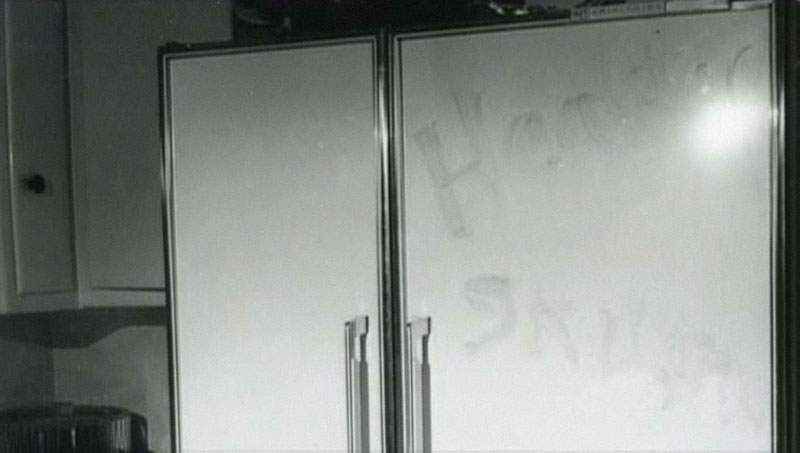
Krenwinkel wrote «RISE» in Leno LaBianca's blood, and that’s what it did: Rise, through the lumpenproletariat of Charles Manson up the middle class runaways, erupting finally in the Hollywood hills. Had the rich & beautiful bitten the hand that fed them? Or had they beaten their dog until it, finally, bit back? Was it the ghetto, the jailbirds and those exiled by the suburbs channelling their vengeance ever upwards—a downward spiral turned on its head, all trance and vertigo—straddling the shoulders of the bourgeoisie so they could strike at the head of society? A petty, powerless blow of great tragedy, no consequence and a value that was only ever symbolic, by now just a frivolous, callous pop culture reference? For all the rhetoric of love, the ambling, aimless seekers were still not getting anywhere. They were stuck with their humiliations, envy and grudges, the failures of their spiritual endeavours.

These guided the hand of Krenwinkel as she kept absentmindedly jabbing at Mr. LaBianca's corpse with a fork, playing with it, making the fork ping out of his abdomen (which had «WAR» carved on it), telling herself, «Now he won't be sending any of his children off to war,» stabbing him 'til she was sure he was dead.

30.9.11

You Know... for Kids!


The son of a friend of mine heard Fela Kuti and, at about only two years of age, stated that it was, and I quote: «Dancing music!» To which I've been told he promptly started moving his extremities about. Such excellent taste at such a tender age is impressive, if not a little intimidating. (And perhaps a little disconcerting; Fela Kuti played some seriously, er, adult music.)

A musical education is not to be underrated. Parental neglect in this regard is to blame for all the rubbish on the hit lists that supplants the intense, intelligent, emotional, sincere, ballsy, gutsy, fun or funny music that is, almost systematically it seems, relegated to obscurity. And so this compilation goes out to the children…


Noise is infantile like poop and stuffing stuff into your mouth. Rock 'n' roll, although people have tended to take it far too seriously for decades now, is childish and puerile. Perfect for kids!

So here's a compilation of idiotic, fun loving music—simple, three-chord, three-minute noise pop with stupid (and out-of-tune) sing-along melodies—ideal for kids who want to shout and bang things into other things and smash toys or their parents' precious furniture rather than be quiet, obedient and bored or boring. As the song goes:
(Freak out!)
When your momma says
(Freak out!)
It's time to go to bed
And so this one goes out to Ask, Ive, Freya, Nico and all other children whose parents are trying to calm them down and put them to sleep, when all they want to do is rock out! And if you want to teach your child English, what better way to make them sing along:
I saw my sisters fight just last week
I didn't know what to do, so I freaked
I climbed the crazy mountain's highest peak
And then I kissed Big Bird on his beak
Let one of the most moronic bands of our time take you to…

PUNKY TOWN!

15.9.11

Groovin' without Movin'—Trippin' Garage Rock


Enlightenment, people! That's what it's all about, though none of us can ever achieve it. From the Beatles' Tibetan Book of the Dead-by-numbers vision of becoming one with the universe (in «Tomorrow Never Knows»), through the Rolling Stones' marketing ploy response («2000 Light Years from Home»), to familiar '60s staples such as «White Rabbit» (Jefferson Airplane), «Eight Miles High» (Byrds), «Have You Ever Been» (Jimi Hendrix) and «Break on through» (Doors), the radio waves from 1966 to the heroin daze of the early '70s spat out many a wide eyed song about minds being blown, hearing the taste of invisible beige—always brought on by a miracle chemical (usually only alluded to or implied in the lyrics).


The fad saw many embarrassments, of course. The Temptations' psychedelic phase, hypocritically balancing bandwagon celebrations of mind expansion with cautionary tales of bad trips (both equally ignorant of the reality of psychoactives), was a particularly cynical attempt at cashing in (though the music produced some of the most ear tingling sonic textures ever put to tape). And the Hair musical was only the nadir of exploitation films that began in the '60s with Psych-out, The Trip and other unintentionally hilarious misrepresentations of the psychedelic experience.


But these were the success stories among the sell outs. Other hopefuls recorded songs they hoped would catch on, tune in and drop out. Some were sincere in their beliefs that entheogens could free their asses, minds and society as a whole. The 13th Floor Elevators, the Grateful Dead and Golden Dawn thought so. Then there were the garage bands that penned acid anthems more in the hopes that the wave would carry them on high to the very top of the Billboard charts. Or who tried to convey something profound, but whose talent, originality or eloquence never quite matched their ambitions. Others—Kim Fowley and Frank Zappa, to name but two—were merely taking the piss.


This compilation collects not the famous anthems you all know from Hollywood films about hippies, but low budget '60s rock odes to chemically enhanced revelation. And it's sequenced to trace the trajectory of a trip! The whole ordeal kicks off with incitement to ingest illegal substances, followed by descriptions of the first surge of heightened sense experience to tickle your mind & body. Then things settle as the trippy hippie thinks he's getting used to the high, finding his equilibrium, before things start getting weird and not groovy at all and the trip goes bad. Or he just panics (as you do). It doesn't last of course, and in the end, though it's not a happy one, the frazzled tripper finally settles back into his own skin, not enlightened but perhaps a little wiser for it.


All to the scuzzy strains of garage rock!

7.11.10

Never Mind the Salsa, Here's... Hispanic Garage Rock!

¡España! A land untouched by Toilet Guppies… Most of the people who check out this blog do so from IP-addresses in Indonesia (hello, Indonesia!), so in an attempt to break Spain and the 30 per cent of South America that isn't Brazil (no offense, Indonesia), I have put together a primer of Spanish-language rock'n'roll, as a tribute to all my Spanish friends (all three or four of 'em—and that's counting the Catalans), one Mexican acquaintance, some Peruvian regrets and three Norwegians I know who are trying to learn Spanish.

For a northern European infected with Protestantism, it's immensely beautiful to see how in Spain people know how to enjoy life and the moment they're in. Like when they're indulging in an absolutely delicious cuisine (one of the world's tastiest!) that, once you take a bite, sends a message throughout your entire body that this shit is unhealthy, the mortality it reminds you of making you feel more alive, not like you're merely preserving your body with all these nutritionally correct foodstuffs.

Spain! The land where they still indulge in bloody, brutal animal sacrifice in public. (Still in touch with what it is to be human, warts and all…) Where you can buy witchcraft paraphernalia in run-of-the-mill specialist shops that aren't even considered weird or unusual. (Keeping the mystery alive…) Where the brown eyed girls' voices are as sensually rough and gravelly as the coffee is smooth and rich… Where the sun actually warms!

Even in the bars, they give you napkins made out of paper that doesn't absorb, so that you have to use a ridiculously extravagant amount of them. And due to a complete and systematic lack of bins in these bars, like a naughty child you have to gleefully throw all those discarded tissues right onto the nasty floor, until at the end of the day you're sat in an oversized ashtray and they finally sweep up the rubbish and the ashes and cigarette butts (because no health freaks refuse you to smoke in public in Spain!). Only then will they put all of that trash in a bin liner that, in more practical cultures, it all went straight into in the first place… And let's not forget the siesta—two hours of sleep or fucking in the middle of the work day, which snowballs your schedule to the point where you don't eat dinner until ten at night—again, against the express advice of your physician.

These self-indulgent, non-functionalistic routines, rituals and ways to go about everyday life, some of them bordering on the idiotic, all amount to one defiant rebellion against the grinding boredom, grim inevitabilities and unhappy accidents of human existence. Rationality's got nuthin' on the complexity and immensity of life, to the point where living your life sensibly isn't sensible at all, so you may as well move to Spain and enjoy yerself!

Or, in lieu of that, listen to some great Spanish-language music, from Spain and equally groovy (if not more so) South America—where mothers pushing prams sexually harrass you in the street and little Lolitas on scooters wolf whistle like hardened construction workers as they drive past. Where the girls are fiery and prone to a violence that defies the dull demands and expectations heaped upon their gender.

Naturally, in the long run the Latin passion, heat, possessiveness, faked intimacy and lack of both punctuality and a neat social order will prove grating on a northern European, but let's pretend I'm not Norwegian for now and that the New World of South America is the Promised Land. In such a promised land, I would like the soundtrack to sound something like this:


These dilettante rockers didn't invent or even re-invent the wheel, but they made something that lasts to this day—a mix of fun, sex and anxiety that's unaffected by nostalgia, irony, pretentions of cool, etc. In addition to a couple of deranged Peruvian originals (check out the cojones on track 21! And 22 gives Norwegian black metal a run for its money any day), there's the unexpected rendition of Desmond Dekker's golden ska oldie «Israelites», as well as a whole host of Spanish language covers of British and US American garage rock staples like «Hey Joe», «Gloria», «Pushin' too Hard», «Little Girl», «Take a Heart», «19th Nervous Breakdown», «For Your Love»… There's the ultimate version of «Wild Thing», rather freely translated as «Loco te patina el coco», performed by some joker calling himself Juan El Matemático (who competes with Los Johnny Jets for best artist name on this comp). Bo Diddley's no-nonsense warning «Mama, Keep Your Big Mouth Shut» becomes even less of a compromise as «Hey, monstro».

Incidentally, there's only one group on here from Spain (I think—some of them I don't know where the hell they're from). Others are from Mexico, some Colombia, some Peru, one from Brazil. I suspect Argentina, Chile and/or Uruguay (or was it Paraguay?) may also be represented, but who knows and who cares, it's all in Spanish and it kicks culo. Some of these tracks are so obscure you wouldn't even be able to find them on secondhand vinyl—you're lucky to get them as low bitrate mp3s after thoroughly scouring the Internet for amateurish Third World music obsessives' dodgy uploads, so don't come pissing and moaning just because some of the tracks are as low as 160kbps and full of vinyl crackle and hiss. The wildest music most true to the spirit of rock'n'roll was never about high fidelity, anyway.

So, roqueros y roqueras, bring out the tapas, cocaine and sexism, and rock out to these scuzzy southern sounds of the '60s. ¡Viva España! and all of her former colonies and la revolución! Rock y roll!

15.4.10

Net Nuggets 31: Dan's Garage

If there's one thing worse than nostalgia, it's irony. Yet sometimes there are people—you might know some—who actually manage to combine these two forms of escapism into one exceptionally annoying way of running from reality. They play and listen to retro music that makes them feel warm and safe due to a (mistakenly) perceived innocence of
the «good old days», while at the same time guffawing at the naffness of it, lest they be perceived as corny by their peers—the cardinal sin of uptight, hung-up, self-conscious hipster doofi everywhere. (If you're wondering, yes, «doofi» is hereby plural for «doofus».) It's like a bulimic's version of having your cake and eating it too. In this way, they distance themselves from the relentlessly confronting nature of reality, both through lulling themselves into believing in something nice that never was and by not taking anything seriously.

And it's hard to like vintage music (or vintage anything) without being accused of nostalgia—or of taking the piss. Yet all decades and centuries offer at least some music that is still valid. «Trendiness» is just another word for «dated», but sometimes—and despite itself—even something easily dated possesses some kind of timeless quality. Believe it or not, there are songs from past decades that aren't guilty pleasures, nor quaint and cosy mementos for people to run to when they're feeling vulnerable and they need the safe feeling of something familiar.

There are legions of people moaning about the nowadays. You know the ones, prone to «they-don't-make-'em-like-they-used-to» type arguments. With '60s garage rock music, for instance, the subculture is lousy with DJs and compilers who always focus on the most saccharine examples of the era—the bubbly harmonies, the anthemic melodies, the feelgood vibe, the puppet-like shaking of bobs—giving the entire decade a false and pathetically rosy hue, colouring its music output innocent and naïve. The nostalgic person is always a revisionist, and we don't approve of that stuff here on this blog.

No, sir. We like our '60s music alive and kicking, as sweaty and scruffy now as it was back then! We want rude 'tude and rawness with our garage rock! We prefer the stuff that doesn't merely sound cute, 50 years on. We want balls, wet with sweat, and possibly other fluids. We want mean drums, nasty guitars and snarling vocals. And if you love that too, you'll like today's Toilet Guppies comp:


Somewhere on the interweb, there's a mysterious man by the name of Dan who possesses in his garage a collection of old 45s that you simply have to take your hat off to. 1960s amateur rock from North America, Europe, Australia, &c. that probably only a handful of autistic record collectors who were punks in the '80s are already familiar with. Dan rips these neglected little vinyl babies and graciously shares them with '60s rock enthusiasts on his blog, detailing info on each forgotten (and in many cases never known) act.

Quite a few of the 45s have appeared—usually in more doctored, cleaned up form—on various garage compilations: the definitive Nuggets boxes, the overrated Pebbles series, the underrated Garage Beat '66 set, the no-nonsense Back from the Grave volumes, the mind blowingly comprehensive Mindrocker comps, the obscurity-truffling Teenage Shutdown collections… And these are just a few in a confusing and expensive array of multi-volumed series of various artists collections compiling ineptly recorded and incompetently performed inane compositions that, despite and because of it all, blow your mind and kick your arse! Dan also does us the favour of ripping B-sides that in many cases never made it onto the mess of garage compilations for sale out there.

So far, Dan has posted 29 volumes(!) in his ongoing series of rare vinyl rips, each volume containing 28 to 31 tracks. (You do the math.) I recommend you go check them out. By way of introduction, I've compiled some favourites—although I've avoided those songs that are already featured on commercially available digital downloads or CDs (that I know of, at least), such as artist retrospectives or compilations like the ones mentioned above. (The only exception is the inclusion of rip-roarin' «Rich with Nothin'» by the Split Ends, which as far as I know only exists on CD on Trash Box—Wild Psychotic Garage Punk!!!, but in an anti-social vinyl transfer that is so insanely tinny it'll give you instant tinnitus. Dan's rip sounds far punchier.)

Dan's transfers haven't been given the vinyl restoration treatment. These 45s are often scratched and worn, but this excessive surface noise somehow adds to the already poorly engineered, badly played music. This is rock'n'roll, with organic and imperfect textures that the record industry would have you believe is wrong, but which is symbolic of the artists' fun-loving enthusiasm for the energy of music, perfect or no, and which provides them and us with so much unbridled glee. Hi-fi perfectionism is the aural equivalent of anal retentive inhibition, and we can't have that. This scruffy stuff may be a sin against technology and Capitalism, but that only makes it better.

So Toilet Guppies hereby prescribes a submersion of your ears in a sea of warm and fuzzy static. Stomp along to the primitive rhythm, from your heart down to your good foot. Swirl to the distortion! Clap yer hands! Play that air tambourine! This stuff will make you feel alive. Sometimes nasty. In fact, it'll make you feel a little like when your eyes hone in on the holes at the centre of the 45s in the picture above. This is a collection of the best in ultra-rare garage rock—songs so obscure they shouldn't be good! Yet somehow they are… It's a bit of a conundrum how something so mediocre could actually be so great, but it's out of place to overthink these simple songs. Anyway, the tracklist is as follows: (For info on the acts, just follow the links in the artist name to Dan's relevant blog posts.)
1. The Judge 'N Jury: «Roaches»
Dan calls this a novelty song, whereas I prefer to view the lyrics' omnipresent cockroaches as a misanthropic, if humorous, metaphor for people. The narrator ends up marrying one, then fathering several. Could it be a snide attack on the bourgeoisie? In any case, even a novelty song is better than the standard boy-meets-girl/boy-loses-girl, «I want to hold your hand» type lyrics as prevalent in the genre as cockroaches are in this song.

2. The Hysterical Society: «I Know»
Move over, rap. A surprising barrage of verbiage in this soulful stomp rocker. I can't catch the words, but they sound cool… Then the drummer loses his cool towards the end and the track erupts!

3. The Pineapple Heard: «Valleri»
Normally this would be a tad poppy for my liking. Still, you can't deny that the steady drums, the eminently hummable melody and the dreamy back-up harmonies make the song irrepressibly catchy. And the riff, so cheery and innocent, is delivered nastily enough that it works. If it sounds strangely familiar, the Fall quote/plagiarise this riff on «Barmy», a song off their 1985 masterpiece This Nation's Saving Grace.

4. The Shags: «It Hurts Me Bad»
Again, a little soft for me normally, but the laid back cool, the soul syncopation and the hand claps put it over the edge. The Shags were from the US, but this sounds like a perfect slice of freakbeat, more restrained and stiff upper lip'ed than the garage-psych punk fuzz freak-outs of North America.

5. King Bees: «On Your Way Down the Drain»
Cow bell and hand claps! Probably the most sensational find in Dan's garage is this song which, unaccountably, isn't one of those household hits everyone knows from the '60s. (But then I suppose it doesn't really fit in on the Forrest Gump soundtrack.) Everything comes together in this forgotten recording by a neglected act: the catchy melody, a driving rhythm, scathing lyrics, snarling attitude and biting delivery… It even sports high production values, with varied instrumentation (a harpsichord sweetening the bitterness in the chorus). It's perfect as is. And a remarkable love song: a vitriolic attack on a lover who hasn't even done anything! Never before has a love song been so hateful:

I don't know, and don't wanna find out
'Bout the money you had
I don't know, and don't wanna find out
Good friends that went bad
But if you keep foolin' around
Causin' ev'rybody pain
Don't forget to wave to me, darlin'
On your way down the drain

And I don't know, and don't care to find out
'Bout all the places you've been
I don't know, and don't care to find out
All the chances you've had to sin
But if you keep foolin' around
Talkin' about your losses and gain
Don't forget to wave to me, darlin'
On your way down the drain

I don't know, and don't wanna find out
What a good person you are
I don't know, and don't wanna find out
How you coulda been a star
But if you keep foolin' around
Drivin' ev'rybody insane
Don't forget to wave to me, darlin'
On your way down the drain

I don't know, but if I were to find out
That you cheated on me
I don't know, but maybe I will find out
Then you'll surely see
I won't care to know what you feel inside
Or what's goin' on in your brain
I'll just sit here and wave to you, darlin'
On your way down the drain

Wow. Check out the 'tude! What a hilariously unnecessary bitch slap, with a little paranoid flourish there at the end as well… Well, everyone gets on someone else's nerves sometimes, and a song for when that special someone gets on yer tits can be a good thing to have, I suppose…

6. 'Twas Brillig: «This Week's Children»
A bona-fide floor stomper to have you dancing like it's 1966, complete with the singer's delicious freak-out towards the end…

7. The Mugwumps: «I Don't Wanna Know»
Another mean love song. At least it's honest:

Cry your eyes out over me
Don't you see, don't you see
All the things they said are true
I'll be mean to you

I don't want to know
About you

You gave me all the love you had
Made me glad, made me glad
Go find yourself another boy
I'll only make you cry


The singer doesn't say why he doesn't «want to know about» the girl, but the song combines an odd consideration for her future well-being with being brutally unapologetic. All set to a highly danceable tune. Few songwriters write catchy songs delivering unnecessarily cruel rejection anymore. Songwriters these days are too sophisticated (or too dishonest?), I suppose…

8. The Seeds: «Up in Her Room» (radio edit)
A song to celebrate uncomplicated pleasure, as if Christianity never happened. Original flower punks the Seeds' until recently available 1966 album, Web of Sound, closes with an ode to a free love sister, a quarter of an hour-long, entitled «Up in Her Room». This is the short and sweet two-minute radio edit, from the flipside of single «Mr. Farmer». I still recommend the epic full length album version, though. Two minutes wouldn't satisfy a sexually generous original punk hippie chick up in her love nest—not by far.

9. 49th Parallel: «Laborer»
If not one of those boringly polemic, Socialist punk songs, this is an amusingly caustic look at Capitalism. That you can dance to.

10. Sumpin' Else: «Baby You're Wrong»
Another turning-against-one's-love-interest track. One can imagine the singer putting into this song all the things he never dares tell her:

Baby, you tell me that I can't dance
(But you're wrong)
You say that I move like there's sand in my pants
(But you're wrong)
'Cause I can do the Duck and the Temptation walk
In fact, I taught you how to do the Dog!
(So you're wrong)

Also, note the gloriously fuzzy bass lining the song like a static-electric carpet underneath your feet. This was before the Rolling Stones ushered in the unfortunate rock'n'roll precedence of burying the bass way down in the mix. Bill Wyman's doormat ways and subservience to the Glimmer Twins is directly responsible for the tyranny of guitar wankery and cock rock!

11. The Split Ends: «Rich with Nothin'»
Like Paul Revere & the Raiders, only nastier! No sweet harmonies here, the band just yelling in the background. Also, whatever happened to rock's signature scream introducing the guitar solos? I know, I know… Feminism and Grunge made the guitar solo politically incorrect. But the least you scuzzy indie rockers can do is wail and howl a little…

12. Terry Knight & the Pack: «Numbers»
Another mean'n'nasty riff backed by stomping drums, with acerbic (if slightly nonsensical) lyrics that could've come out of Bob Dylan's mordant mouth in 1966, had he been slightly more coherent:

You've got 13 years of learnin'
At the finest schools
They gave you 26 teachers and you made them all
Look like fools
You told 11 good men that you loved them
But you know you lied
'Cause all you ever do is
Lay around your house and cry

13. The Todds: «I Want Her Back»
The singer, drummer and guitarist—even the organ player—are all competing here. Even the lyricist and the guy who wrote the melody must have been competing with each other on this one! The result is rocking. (Creative tension, people!) And I suspect the pogo was invented whilst trying to dance in time to the drummer and organ player on this frantic number.

14. The Bougalieu: «Let's Do Wrong»
«The way you look at me / A man can plainly see / Your eyes are full of lies»! There's that bitterness and disdain again—something civilised and healthy individuals aren't supposed to feel, but which they're allowed in songs such as this, so liberating. Also, the title alone is worth the price of admission. The guitar player sounds delightfully impatient, and the avant garde break sounds like US Maple, thirty years earlier. And surely this singer must be one of the coolest human beings to ever have walked this mucky space rock? He sounds like the kind of guy who could wear sunglasses after dark and get away with it.

15. Don & Jerry w/the Fugitives: «In the Cover of Night»
«All the things I need / Are waiting, yes indeed / In the cover of night»!

16. The Tropics: «As Time's Gone»
Dance!

17. Boo Boo & Bunky: «This Old Town»
«Boo Boo & Bunky»?! Kudos for the name alone. But the song is actually good. Driving, pounding, stomping drums, simple and primal and made for the dance floor.

18. The Belfast Gipsies: «Gloria's Dream»
Scruffy Murphy rock here, no doubt trying to cash in on Them's monster ode to teenage lust, «Gloria». The party the singer's on about is one party I'd love to attend…


19. The Teddy Boys: «Where Have All the Good Times Gone»
An American cover of the Kinks' original, this performance is indicative of the difference between the more pastoral and restrained British mod/freakbeat scene and its sexier, more unhinged cousin across the pond. This rendition wins, hands down.

20. The Hardtimes: «Fortune Teller»
The Rolling Stones did a decent version of this funny, little ditty, lyrics like a joke, complete with set-up and punchline. But this version is just as good, if not better. Uncomplicated rock'n'roll run-through.

21. Vinnie Basile: «Girl»
Stupid lyrics, inept musicianship, just what the doctor ordered. Proof that obvious rhymes, out-of-tune strumming and hack drumming can create a whole greater than the sum of its parts.

22. The Sting-Rays Of Newburgh: «Fool»
Nasty riff, psychedelic organ, echoing harmonies… Can't you just hear the black/strobe lights and the swirling oil projections on the wall? Another party, part debauchery, part existentialism, that I'd love to attend, most psychedelically.

23. The Bluebeards: «Come on-a My House»
The Bluebeards are pushing it, kitsch-wise, with the oriental flavourings in the melody and percussion, but the way they emphasise «candy» when they harmonise, «Come on-a my house, my house / I'm gonna give you caaandy» sounds gleefully wrong and creepy. Wonder if one of these guys is a Catholic priest now?

24. The Four O'Clock Balloon: «Dark Cobble Street»
Another dancer.

25. The Wolf Men: «Watusi Beat»
Sounds like they stole the 13th Floor Elevators' «You're Gonna Miss Me», but with a scuzzy sounding guitar solo like that, who cares?

26. The Troyes: «Rainbow Chaser»
«One day you'll wake and realize / That the love that's in her eyes / Was only a disguise…» Banal lyrics made to sound profound; hypnotic vocal melody, groovy rhythm, great garage-psych. Yeh!

27. The Evil: «Whatcha Gonna Do about It?»
One of those staple garage covers. With the way they drawl, ever-so-suggestively, «whatcha gonna doooh about it?», my money's on the Evil's version…


28. The Myddle Class: «Don't Let Me Sleep too Long»
Pure ecstasy and affirmation of life. We can all sleep when we're dead, so don't let me sleep too long. Dance, Daddy!

29. Corporate Image: «Not Fade Away»
The Rolling Stones' rendition seems to be considered the definitive version of «Not Fade Away», but this relentlessly urgent, driving stomper by the Corporate Image (what a great moniker!) pisses all over it:


How could the Corporate Image's version have ended up such an obscure recording?! Another of Dan's remarkable finds.
For much more of the same, go check out Dan's curation of rock heritage and socio-cultural history over at his virtual garage. Also, Garage Dan has a band, Dan Frank & the True Believers. I don't know whether Dan is the Dan who's the eponymous man in the band, but there you go.

9.4.10

Love (Pt. 6), or, Teenage Lust Psych-out!

In this latest installment in Toilet Guppies' meticulous and exhaustive exploration of love in modern music, we've finally arrived at garage rock from that decade of love—the 1960s.

V/A: Teenage Lust Psych-out!—18 Far Out Love Freak-outs from the Garage [.zip]

Did you ever love someone so much it kind of hurt? Chafed around the edges of the old corazón a bit? Ever felt that intensity that blurs the boundary between pleasure and pain, whether it's your mind hopelessly in love with no way of controlling it (reality as unpredictable and fickle as it is), or whether it's your body pushed over that edge and climaxing with violent spasms and tremors? Sure you have, and I bet you didn't know what to do with yourself.

To alleviate the violence of emotion, perhaps you grabbed the nearest CD by some singer-songwriter waxing poetic about the dizzying heights and crushing pitfalls of romance. That was a mistake. It won't do you any good indulging in sentimentality. What you need to keep that crazy love from exploding into a mess of human emotions, sticky fluids and funky entrails is this compilation, designed by Sheik YerdiXXX for the express purpose of acting as a vent, keeping you somewhat sane while undergoing the psychosis of overly enthusiastic affection, whether you choose to dance or fuck to it to release the tension of ecstasy when bliss lasts longer than its usual brief flash. The human body can stand pleasure only so long at a time. You, my friend, need relief, release… fun!


The last half of the 1960s saw an explosion in amateur recordings, often in the form of quickly forgotten (if at all noticed) one-off 45s by a dizzying plethora of dilettante R&B rockers all named The something-or-others who, more often than not, were still in their teens—and almost exclusively males. Erect, bursting-at-the-seams, rearing-to-go boys in their hormonal prime, on the verge of manhood and of getting it on (or so they desperately hoped). Their usually badly engineered and poorly mixed tunes typically featured stomping drums, jangly fuzz guitars and the occasional demented scream, like so many sexually frustrated howls at the moon (and all that signifies—loneliness, lunacy, the tide, menstruation and all that). When the lyrics' subject matter was not bitter recrimination of some woman who didn't put up (or else put up too much, with too many other men), a typical theme was desire for a girl yet to be persuaded and mounted (the prospect of all that pent up love milk about to be pumped out, at last!) or the joy felt at the love, physical or otherwise, provided by this girl. The sexual frustration or elation (whichever the case) was such that the song's narrator would often proclaim, out of either impatient readiness or blissed-out gratitude, his true and undying love.

Somewhat rashly, one might say, as such hormone-fuelled proclamations seem to mistake lust for affection. But then writers of love songs often forget lust when they pen their ballads of seduction, slyly playing upon heartstrings instead (which in general is much more effective than appealing to just sex—declarations of mere horniness often being considered unsophisticated by the object of seduction). If love is one part lust and one part hope (and, as long as we're being honest, a pinch of need), lust is conspicuously absent from most love songs. So these inept compositions—lazily rhyming, as they often do, «girl» with «world», «fine» with «mine», «nice» with «spice» and «good» with «would»—are refreshing. They get down to the nitty gritty of love: simple, innocent—and expressed with your body. After all, lovers tend to usher in a new romance with rampant fucking. And should a lasting relationship be formed, with the lovers going through various ups and downs, enduring slumps and crises, then rediscovering their spark would, again, be marked by a whole lotta fuckin'. Ain't nuthin' unsophisticated about it, honey buns…

So forget tender ruminations of everlasting soulmating for now. Here are ecstatic expressions of the life force and the meaning of human existence in all its randy elation. Songs almost mystically joyous, with roaring guitars taking on decidedly erect shapes and the screaming, broken voices ejaculating lust for life—and pusy.

As Rick James once told Tracy Morgan: «Freaky-deekies need love too. Freaky-deekies need love, too…»

For all you love hounds out there, then, Toilet Guppies brings you a teen mix from old 'Dixxx; a various artists collection of scuzzy, fuzzbucket '60s punk songs, some of them rare even on CD comps, all revolving around romantic affection. Unhinged teenage ejaculations of love, to be precise. This guaranteed no-filler all-killer compilation of some of the best and most blistering love songs pre-cum pre-punk ever produced is a reminder to all that love needn't be tender and gentle, expressed in faint-hearted balladry. It can be hard and upright meets soft and yielding, and awash with warm and sticky bodily juices. Let that love (or E) cup runneth over! Besides, there's no affirmation of life quite like teenage trash explosion—snotty throats incompetently vomiting out lust for life and sexual frustration in equal measure. Yeh! Switch off your mind and give in to your hormones! Rock'n'roll! And if you have a loved one, grab her and go dancin'…

1.4.10

Net Nuggets 31: The Boston Strangler

The Bugs: «Strangler in the Night» b/w «Albert, Albert» [.zip]

One might be forgiven for thinking, when downloading Charles Manson or Jim Jones recordings off this very blog, that Toilet Guppies is just another bratty website venerating cult killers as icons by way of smug irony. Or worse still, one might assume that Toilet Guppies is an exponent of the kind of self-proclaimed «Nihilism» invoked by Genesis P-Orridge, Whitehouse, Lydia Lunch, Henry Rollins, et al. in such artists' self-indulgent and pretentious flirtation with serial killers, paedos and genocidal Fascism.

Far from it. This «dancing with danger» by artists who never even hurt a fly themselves—or the Warholian celebration of killers, turning tragedy into some kind of kitsch joke for those struggling to come to terms with the unmerciful aspect of humanity (the Brian Jonestown Massacre, anyone? Black Lips' Elisabeth Fritzl-themed «Trapped in a Basement»?)—isn't all it's cracked up to be. Just ask Mick «Street Fightin' Man» Jagger how he felt at Altamont.

At best it's annoying—like the popular myth and marketing campaign of Johnny Cash being such a rebel, justified by his performing for «underdogs» in prisons and singing songs celebrating murders he was never ever close to committing, let alone truly understanding. (When he wasn't singing hymns, that is.) But then artists tend to find perpetrators more interesting than their victims—an empathic focus that would be far more emotionally taxing, of course. Focussing instead on «rebels»—rapists, murderers, gangsters, hooligan types, &c.—probably makes sensitive artistes feel morally couragous and possibly even badass, without actually having to summon the chutzpah be so—or without having to deal with the consequences. But really it's just empathy or subversion for dummies. (Thank god, then, for Diamanda Galás, giving righteous indignation and vengeful fury a voice amid the din of gratuitous glorification.)

Less pretentious than your standard renegade murder balladeers, perhaps, but all the more kitsch is '60s garage frat punks the Bugs' collaboration with rapist and disputed murderer Albert DeSalvo, a/k/a «the Boston Strangler». In 1965, the obscure, attention hungry Boston rockers ostensibly bought a poem off the by then imprisoned DeSalvo, had it recited by New York radio DJ Dick Leviathan and set it to a maudlin rock ballad melody. In actuality, the words were penned by ghost writer James Vaughn, with DeSalvo vouching for it by signing it «… These are my thoughts, feelings and emotions». What his motivations were in passing these corny sentiments off as his own we'll never know, but a desire for fame is the obvious guess. Truth probably wasn't his suit, anyway, what with him confessing to some crimes he probably didn't commit (along with the ones he did do).

As to how closely these thoughts, feelings and emotions correspond to DeSalvo's real ones, there's no way of telling. But the ghost writer does manage, wittingly or no, to convey an always self-pitying sociopath's inept attempt, even after being caught out, at fitting in by feigning the appropriate human emotion—in this case contrition. Unsuccessfully, one might add, the narrator's self-pity shining through. But as with Jim Jones' final rant before his «revolutionary suicide» (read: manipulative mass homicide), it's interesting to note how many people actually fall for psychopaths' posings as martyrs, buying the act entirely. Had not DeSalvo been murdered in the prison infirmary, he'd be receiving tons of love letters to this day.

And so these novelty Hallowe'en words seem oddly fitting in the end. Not bad for a song which very idea hinges on a perverse, if facile pun on «Strangers in the Night»…

The B-side, the Bugs' own «Albert, Albert» is even more offensive (bizarrely rebuking DeSalvo for treating the singer's sister poorly—I'm guessing he never really had a sister), but the performance is a rock'n'rollicking slice of garage beat, rough, danceable and effortlessly cool.

[This vinyl rip of the original Bugs 45 was taken from the superb blog Dan's Garage.]