Showing posts with label [Culture 101]. Show all posts

24.4.12

Hate-Ashbury, or, War in Peace (What a Funny Combination)

V/A: Hate-Ashbury—Freedom on the RISE, 1965-1970,
vol. 1 [.zip]
vol. 2 [.zip]
vol. 3 [.zip]

(Or, a short sampler of the three volumes:)

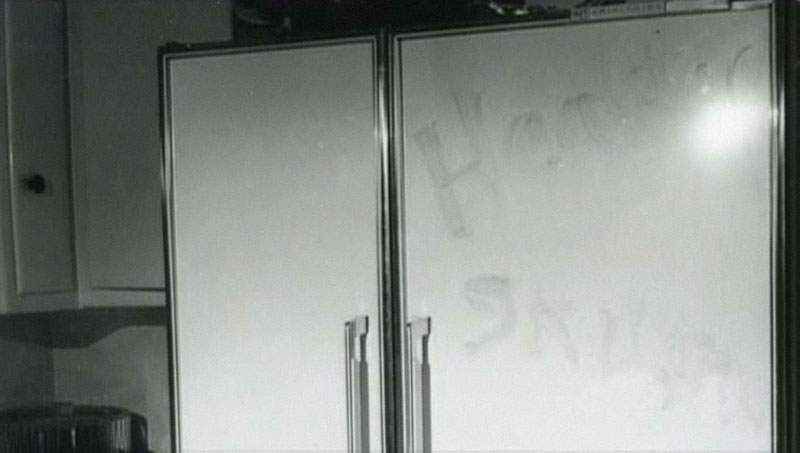
With Martha Marcy May Marlene making the cinema rounds, once again that old ghost of the Zeitgeist, Charles Manson, rears his ugly, oddly compelling head. Not that there's anything romantic about a megalomaniacal cult pimp con guru partly responsible for mass murder. Or you could say that's precisely what there is: nothing more than romanticism to his rebel's legend. Chaos does seems to call to us, its sweetly morbid drone always a guilty pleasure (the death drive, blah, blah). But regardless of any juvenile fascination with Manson, there is a legitimately enduring relevance to the whole «Manson Family» tale, and the era it both epitomised and, in a way, put an end to.


Baby boomers, modern day hippies and fancy dress outlets tend to cast the '60s as a time of hit or miss fashion laced with well-meaning, communally held ideals that were scuppered at best, a little naïve at worst—a societal emancipation set to assuaging, innocent music. But if the music wasn't always that soothing, even the gently strummed philosophical lullabies of the age could contain something decidedly raging. Bob Dylan's mystically paranoid «A Hard Rain's a-Gonna Fall» spun apocalyptic visions on the back of the Cuban Missile Crisis. Then there's his pacifist's assault, vicious and vindictive, on the masters of war:
And I hope that you die
and your death'll come soon
I will follow your casket
in the pale afternoon
And I'll watch while you’re lowered
down to your deathbed
And I'll stand o'er your grave
'til I'm sure that you're dead
And that was in 1963. The counter-culture hadn't even begun.


Manson himself sang and wrote songs a lot less vitriolic. They were greatly admired by Neil Young. One was recorded by the Beach Boys. Manson's partner in crime and alpha coyote rival out there in the desert, Orkustra guitarist Bobby «Cupid» Beausoleil, provided the inspiration for the moniker behind his former band Love. That was before he starred in forgotten soft porn classic Ramrodder, scored Kenneth Anger's «Lucifer Rising» and stabbed a kindly music teacher to death. The Buddhist and, according to one true crime writer, «successful bagpipe musician» Gary Hinman had been held hostage in his own home for three days by Beausoleil, Susan Atkins and Mary Brunner. Manson made a short appearance to chop the captive's earlobe off with a machete. Two days later, once Beausoleil had stabbed Hinman twice in the chest, Atkins suffocated him with a pillow, perhaps to stifle his last ditch chanting of «Nam-myo-ho-renge-kyo, nam-myo-ho-renge-kyo…»


Four years earlier, in 1965, Manson hanger-on Catherine «Gypsy» Share, then going under the assumed artist name of Charity Shayne, had released «Ain't It?, Babe», a catchy jingle jangle single cheerily gloating over a former lover's misery. In 1971, she robbed an arms store in a bid to stock up for the hijacking of a plane, in a scheme to free Manson, by then convicted and imprisoned. One hostage would be killed for each hour that passed until Manson and his incarcerated cohorts were released. But the preliminary robbery ended in a shootout with the police that left Charity wounded, arrested and sentenced to five years.


There's also Beausoleil's former band mate, Arthur Lee, who is rumoured to have been prone to pistol waving antics himself, threatening the life of friends in fits of freakout. And Alexander «Skip» Spence—guitar player for Quicksilver Messenger Service, drummer for Jefferson Airplane and co-founder of Moby Grape—tried using an axe to get through band mates Jerry Miller and Don Stevenson's hotel room, «Here's Johnny!» stylee. Not to mention Sly Stone. In the year of our love 1967, Sly & the Family Stone was touted as the great black-and-white hope: the first interracial band in the US. That claim must surely be untrue, but the band's marketing would have it that they were the personification of peace, love and civil rights. Stone, however, started growing fond of a bit of the old ultra-violence, to some of his band mates' lack of immediate personal safety. Stone is said to have let various incorrigible jailbirds and parasitical pimps, all with an unhealthy obsession with A Clockwork Orange, into his inner circle. There came the night, apparently, when bassist Larry Graham had to flee his hotel room for fear of his life. One of the band's roadies didn't make it out, receiving a gratuitous beating. And that was the end of Sly's Family.

One of the things Manson took from growing up in prison was polarised race relations. He had a fear of black people, not helped by the formation of the militant Black Panther Party in 1966. Elaine Brown started out as a rank-and-file member, cleaning the Panthers' guns, but later became the party's first female Chairman. In 1969 the Panthers commissioned her to record an agitprop album, Seize the Time, which features the Black Panther anthem. A few years later, the badly beaten body of Brown's assistant, Black Panther bookkeeper Betty Van Patter, washed up on a San Francisco beach. Van Patter had discovered irregularities in the Panther's books, just as Brown was running for councilwoman. When Brown published her memoirs—tellingly titled A Taste of Power—she wrote that Van Patter had been a convicted drug dealer. These claims were omitted from later editions when it was revealed they were complete fabrications on Brown's part. Suspicion has fallen on her for ordering the unsolved murder. «All's fair in love and war»—an idiom seemingly tailored for the '60s.


And of course there's the Altamont Free Concert: Hell's Angels stabbing a raving, gun flailing teenager to the strains of mean spirited rant of resentment and control, «Under My Thumb» by the Rolling Stones. The Stones had flirted with being «the bad Beatles» for so long, by 1968 they'd added songs inspired by Albert «Boston Strangler» DeSalvo, Lee Harvey Oswald and revolt to their already defiant repertoire of misogyny, androgyny and, less convincingly, Satanism. Sample lyric:
I'm called the hit-and-run raper in anger
The knife-sharpened tippie-toe
Or just the shoot 'em dead, brainbell jangler
You know, the one you've never seen befo'

So if you ever meet the midnight rambler
coming down your marble hall
Well, he's pouncing like a proud black panther
Well, you can say I, I told you so
To clarify, should there be any confusion or subtlety, Jagger-Richards sign off with, «I'll stick my knife right down your throat, baby, and it hurts!» In hindsight, «Midnight Rambler» sounds prescient. The worst part is that the song is the Stones at their musically most pounding, grinding, crawl-on-your-knees sexy.


Only five months before Altamont, Stones multi-instrumentalist Brian Jones, who scored the film A Degree of Murder and even played saxophone on the Beatles' «Helter Skelter», had been found floating—or rather, not floating—in his pool. It was the first of many '60s rock star deaths, and to some a suspected homicide. Moreover, Mick Jagger had scored the template for «Lucifer Rising», Anger's «Invocation of My Demon Brother» (also starring Beausoleil, as Satan). He also appeared on Dr. John, the Night Tripper's schlock hoodoo album The Sun, Moon & Herbs. And so naturally, when Hell's Angel Alan Passaro stabbed Meredith Hunter, the Grateful Dead—long-time champions of the Hell's Angels, who had recommended using the biker-rapists as festival security in the first place—were quick to blame the disaster on all the karmic indiscretions of the Stones. No sympathy for the Devil, then. The Dead even went on to compose a couple of strangely chipper-sounding ditties about the misadventure. The original hippies, who had thought they could change the Hell's Angels, were unable to grasp what had happened, what was happening and what has always been happening:
I spent a little time on the mountain
I spent a little time on the hill
Things went down we don't understand
but I think in time we will


But even before Altamont, in 1968, the MC5 caused a violent, but as luck would have it not death-inducing riot, when they played impresario Bill Graham's New York venue, the Fillmore East. The gig was organised in conjunction with a hippie militia of sorts—a no-nonsense, anarcho-Dadaist street gang with revolutionary pretensions called the Motherfuckers. (Motto: «We will be free or we will not be.») In the inimitable cattiness of A&R man Danny Fields,
… the Motherfuckers were a radical East Village group who had been demanding that Bill Graham turn the Fillmore East over to them one night a week because it was in the «Community.» My favorite word, the «Community.» They wanted to cook meals in there and have their babies make doody on the seats. These were really disgusting people. They were bearded and fat and Earth motherish and angry and belligerent and old and ugly and losers. And they were hard. …

So they booked a Thursday night, and to placate the Community five hundred tickets were given to the Motherfuckers to distribute to their fat, smelly, ugly people.
(Cf. Please Kill Me—The Uncensored Oral History of Punk.)
But when the supposedly militant White Panthers of the Motor City Five arrived in a limo, the radicals' sensibilities were upset. The Motherfuckers kicked the jams out of them. Guitarist Wayne Kramer had to fend off a knife attack, while Graham had his nose broken with a chain. Literally adding insult to injury, the Motherfuckers screamed that the MC5 were «Pigs!»—the same dehumanising, vaguely anti-establishment epithet that would later be scrawled in the blood of Gary Hinman, Wojciech Frykowski and Leno LaBianca by Bobby Beausoleil, Susan Atkins and Patricia Krenwinkel.


Also in 1968, one of the Motherfuckers' affiliates, the warped but brilliant Valerie Solanas, shot Andy Warhol in his lungs, spleen, stomach, liver and esophagus, killing him… for a while, until doctors managed to bring him back from clinical death. Solanas also shot critic-curator Mario Amaya in the hip, and tried to blow Warhol's manager's brains out, failing only because her gun jammed. Warhol, of course, had previously produced mythic speed reprobates the Velvet Underground (and Nico), bank rolling their S&M flavoured brand of queer junkie hipster rock, which is easily dated to the '60s, though far from summery or lovely.


It's not fair to say that hippies went from being deluded peaceniks to confused and rabid animals that, in some nightmarish collapse of innocence, had to come to terms with their own all too human nature. Hippies were the «original punks» and all that, scuzzy well before 1969. There's even evidence of it in the music. Especially in garage rock—a genre that could be as spitting and vindictive as the worst of them—but also in folk rock, abounding with gleefully sung Schadenfreude and apocalyptic visions, and in chart topping psychedelic pop, milking ideological trends or espousing corny, surprisingly foresighted cautionary tales. These days, New Age vegans who like to see Che Guevara as the Communist with a heart of gold fail to recognise that the '60s quest for realisation delivered people into occult fancies, armed revolution and violent psychosis, as much as Hare Krishna centres, macrobiotic dieting and nirvana. One account of the Manson troupe's move from San Franscisco would have it that Haight-Ashbury, with its overwhelming influx of runaways, on-the-runs and parolees, was becoming too unsafe. For the Mansons. That love was free doesn't mean it couldn't be stolen.

The progression of the 1960s isn't some cautionary tale, nor a romantic one. The mythic aura surrounding grim reaper of love Manson and his band of creepy, crawly midnight ramblers is in no small part due to the wealth and celebrity of some of their victims. Serial killers prey on the poor, and speedfreaks, crackheads, et al. do unspeakable things to one another (and their loved ones) all the time. They're not relegated to the history books for it, nor are they taken to bookend eras. Manson and Altamont provided a neat ending for those subscribing to the superstition that round numbers are somehow significant. That a decade must come to some sort of narrative end. 1969 was seen as worse than '67 or '68 because 1970—that new morning—was fast approaching. The horrors and mishaps of 1969 are taken as omens, as the failure of peaceful hopes and dreams. This in a decade where the mainstream was involved in daily carnage in Vietnam, Cambodia and Laos, and even in ghettos, universities and, in some countries, secret prisons.


All this is not to be morbid. In all its history, music never seemed to matter as much, collectively speaking, as in the 1960s. The belief in its transformational powers, along with its inextricable links to political events and views, have never been paralleled, before or since. The music of the '60s doesn't merely say something about taste and aesthetics. (These days, politics in popular music is limited to people getting annoyed at Bono and that guy from that band that had that song about the eye of the tiger in Rocky III who sued Newt Gingrich for using the song without their consent.)


Here, then, is a three-disc historical document… that rocks: A compilation sequenced more or less chronologically, tracing the trajectory from anti-war protest through personal and romantic resentment, to attempts at turning people on, to the boundary-crossing mysticism of transcendence and transgression, to calls for what Fields called «a very lovely and attractive, sweet revolution» and, finally, to murder and lunacy. It begins not only with hope, but also with queasy premonitions and various seeds of nastiness, ending in stabbings and schizophrenia. Sticking to chronology is better than imposing a selective progression in hindsight. The confusion this lack of narrative reveals is only fitting to the times. That said, the chronology also offers a glimpse into how perceptions, if not reality, developed. Deadly stabbings weren't invented in 1969, and it's only their connections to celebrities (Sharon Tate and the Rolling Stones) that made it seem so. The songs did become meaner, more militant or mentally unhinged as the decade raced along, hope giving way to disillusionment, psychout and loathing. And yet none of these are completely absent from the earlier songs. It wasn't love, but resentment that blossomed.


The music on this collection—some of it obscure, some of it chart topping—sums up the main ingredients of the '60s counter-culture: The desperate wish to love, even if and especially when resentment still lingers; disdain for the old order; the eagerness to break into new, unchartered, previously forbidden territory; the hubris that comes with strength in numbers; the apocalyptic fantasies of Judeo-Christianity (Heaven on Earth brought on by Hell on Earth); fascination with Eastern metaphysics (all is one, life and death are the same, kill your ego); anti-war pacifism; and, finally, when patience had run its course, revolutionary fervour. Some of the people who glowed the brightest—Skip Spence, Syd Barrett—were left muttering with paranoia, at once sad and creepy, profound and bullshit. Most of the bands had little or nothing to offer in the decade to come. Values had been upended, only for people to find that some boundaries might have been in order. Otherwise freedom is chaos, and chaos has no constraint. Chaos is violent flux and change—Patricia Krenwinkel hacking away as Abigail Folger tells her, «You can stop now; I'm already dead.» Chaos is the kind of «freedom» that leaves 28 stab wounds in one body.


Krenwinkel wrote «RISE» in Leno LaBianca's blood, and that’s what it did: Rise, through the lumpenproletariat of Charles Manson up the middle class runaways, erupting finally in the Hollywood hills. Had the rich & beautiful bitten the hand that fed them? Or had they beaten their dog until it, finally, bit back? Was it the ghetto, the jailbirds and those exiled by the suburbs channelling their vengeance ever upwards—a downward spiral turned on its head, all trance and vertigo—straddling the shoulders of the bourgeoisie so they could strike at the head of society? A petty, powerless blow of great tragedy, no consequence and a value that was only ever symbolic, by now just a frivolous, callous pop culture reference? For all the rhetoric of love, the ambling, aimless seekers were still not getting anywhere. They were stuck with their humiliations, envy and grudges, the failures of their spiritual endeavours.

These guided the hand of Krenwinkel as she kept absentmindedly jabbing at Mr. LaBianca's corpse with a fork, playing with it, making the fork ping out of his abdomen (which had «WAR» carved on it), telling herself, «Now he won't be sending any of his children off to war,» stabbing him 'til she was sure he was dead.

6.4.11

Smash! Hits of the '80s


Yours truly was too young in the 1980s to appreciate its culture, mainstream or otherwise. My father didn't play tapes of the Fall in our car on holiday trips; my mother didn't breastfeed me while listening to Throbbing Gristle's 20 Jazz Funk Greats. In terms of '80s music, my most formative memory was feeling psychedelically terrified at the sight of the black lights in the music video for Wham!'s «Wake Me Up Before You Go Go», and feeling similarly freaked out by the singer in Fine Young Cannibals. With Sting, Lionel Richie and Stevie Wonder bogarting the TV screen, the young me was left no other option than to seek refuge in my parents' obsolete record collection of mainly bland Beatles records. (At least they didn't sound so flaccid.) Like the dayglo fashionista hipster kids postmodernising new wave, I can only appreciate the 1980s in hindsight. And in hindsight, the yuppies and whatever cultural momentum it was that propelled grown human beings into sporting pastel, fluffy hair and shoulder pads made the '80s one of the most obnoxious and least redeeming decades in recorded history. In terms of its sound, the production values polished every edge down to a nub, making everything sound wet and limp. Pop music reached its absolute nadir, from which, thankfully, it has since made great strides (all things being relative—Kylie Minogue is no match for Rihanna or fierce Sasha).


In the 1960s, before record companies had truly honed their industry, there was no distinction between major label mainstream music and independent underground. The industry didn't understand its demographic and so just threw money at anyone they thought might possibly be considered hip by the kids. As the corporate confusion and dust of desperation settled, the '70s saw the artistically excessive (and so less commercially viable) artists increasingly displaced into a newly defined underground. By the 1980s, the schism between art and entertainment was as complete as it has ever been.


Thanks to the major labels' devious marketing in response to the masses' growing boredom with the '80s pop formula, the '90s sowed confusion as to what was mainstream and what was «alternative». Nirvana? Faith No More? Pearl Jam?! (I think it was Jon Bon Jovi who once remarked, «An alternative to what?») The greatest trick the major labels ever pulled was convincing the world Nirvana were alternative. By the '00s, indie was no longer strictly independent, and internet literacy and entrepreneurship made trendy underground acts more competitive in the market place, sometimes blurring the distinctions between «mainstream», «independent» and «underground». Hardly anyone can tell who the Man is any longer, or who is really underground.


Perhaps more than any other, the '80s stands as a decade of near complete musical hegemony of the establishment, with relatively little crossover between the commercial and the avant-garde. Its legacy is a monument to blandness: Madonna, Cyndi Lauper, Blondie. And that's who nostalgic indie kidz adulate. In karaoke bars all over the world, people ineptly sing along to artistic atrocities committed by Phil Collins, Elton John, Bryan Adams, Rick Astley… You name it, it's dreadful. And then there are the goths, with their corny Cure, Depeche Mode, «Love Will Tear Us Apart» and all those awfully brooding synths. White culture has always looked to black culture for coolness, as straight culture looks to gay culture for style. But the '80s was a nail in the artistic coffin of James Brown, and disco's undertaker, too, giving us instead Luther Vandross and Whitney Houston, Frankie Goes To Hollywood and George Michael.


Oh, and the production values… The decade of synthesizers, '80s sound engineering and mixing rendered everything plastic. Noise or even just dry, fuzzy texture were relegated to a repressed memory of the '60s.


The '80s saving grace was post-punk. Punk was always a bit shit, really. Not as gritty or noisy as its invigorating precursor, hormonal '60s garage rock, '70s punk typically featured higher, clearer fidelity, just with sloppier performances, most punk amounting to little more than incompetently played boogie-woogie. The music that wasn't performed less energetically than garage rock—perhaps due to the pretentious use of heroin as a kind of adolescently Nihilist statement—was performed impatiently—perhaps due to the speed. Punk was essentially blues without the syncopation, the groove, the sex. Eager to hit the three-minute completion mark as soon as possible, punk was essentially the musical equivalent to a premature ejaculation. «Heigh ho, let's go,» indeed…


But the '80s saw a more sonically adventurous—not to mention emotionally uncompromising—genre that was never even given a name. For want of a better word, bands like the Fall, Birthday Party, SWANS, Sonic Youth, Butthole Surfers, Jesus & Mary Chain, et al. have merely been lumped together into the «post-punk» bargain bin. It's a measure of these artists' sense of individuality and experimentation that a sobriquet was never invented that could sum them all up, despite being fish in the same pool. Unlike new wave, grunge or punk itself, «post-punk» was not a movement. The artists were too intelligent, self-sufficient and confident to join any ranks, despite not being above collaborating or touring together.


In general, however, the playing was tighter, the sound noisier, and the feelings expressed beyond the poetics of mere junkie disgruntlement set to sloppy bar rawk. Let the punk stew in his beer-and-glue stupor, covered in his neglected dog's excrement there on the floor of some uncleaned squat wherein he somehow feels morally superior to the people who originally bought the sandwiches which leftovers he picks out of the dumpster (emptied and paid for by the people who actually pay taxes for the basic services everybody enjoys), and let somebody interesting say something.


The only question is, can a decade that spawned Huey Lewis & the News, Robert Palmer and Bros. ever redeem itself?


Yes, it can. Here's a comp comprised of the best '80s acts I can think of. Obviously, other good music came out of the '80s (Devo! Grace Jones!), but I've stuck to artists specifically associated with that decade, while avoiding the one hit wonders and guilty pleasures (as if guilt and pleasure have anything to do with one another).


The result of such a collection is telling: With the financial boom and the excessive optimism it encouraged, the underground's response became ever more perverse and determined. The cleaner the sound and content of the hits, the dirtier the sound and content of the obscurities. The chirpier the one, the pissier the other. The noise of most '60s rock was a consequence of limited technology and funds; by the '80s any scuzzy noise was entirely deliberate. The results are monstrosities in sound, and Toilet Guppies dares you to name any young band making the rounds today that possesses even a fraction of the intensity of many of the acts on this Super Hits of the '80s collection!


Yeah!

26.5.10

Beát!

This girl I like expressed an interest in beatnik recordings. Hence this compilation of beat poetry (sucker that I am):


This is not some lit. history class, and the collection is not representative of what the «Beat Generation» was all about. It features only one original, bona fide beat poet (Jack Kerouac), ommitting the boring ones (Allen Ginsberg, Lawrence Ferlinghetti, et al.). William Burroughs' stuff stands so apart from standard beat fare that it didn't make the cut. (He was too wise to ever join a movement anyway.) Also, I left out music by the obvious inspiration to many of the original beat poets—most notably Charlie Parker and Slim Gaillard. Those cats ain't groovy enough to dig. I've also skipped the scat-jazz so typical of beat comps. (In the immortal words of Vince Noir: «We don't need scat at this point.»)

Some forgotten café poets of the era are on here (like Felix Lupus, Ringo Angel). And sometimes, fake is better than the real thing, so I've also included examples of beatsploitation (Edd «Kookie» Byrnes, Babs Gonzales) and parodies (Del Close & John Brent, Bob McFadden & Rod McKuen). And of course, I've included some of the jazz performers who tried their hand at poetry (Charlie Mingus) or who originated the Afro-American hipster jive lingo later adopted by the would-be cool white cats of the beat generation (Cab Calloway).

Most of the selections could be called novelty songs or comedy recordings, but this is not an exercise in irony or nostalgia. Hepsters talked like James Brown danced, and jive and beat poetry are easy on the ears and a joy to your Wernicke's area, so forget kitschiness and enjoy.


Here goes:
The BEATITUDE Of HIP—Genuine & Phony Beatnikmania:

1. Patsy Raye & the Beatniks: «Beatnik's Wish»
I've no clue who Ms. Raye was or is, but the Gene Krupa-style drums, nasty trumpet and sultry poetry recital of this 1958 Christmas number is certain to get you in the mood…

2. Charles Mingus: «Freedom»
Here jazz composer, double bass virtuoso and band leader extraordinaire, Charlie Mingus, tries his hand at the old poetry-and-jazz combo. Concerned as his poem is with civil rights and the racism of the day, one could argue this number isn't really beat poetry. The beatniks got their hep cat jive from black jazz, but none of the social commentary. They were middle class white people, after all, and to them being black in the US in the 1940s, '50s and '60s was all about being enviably cool rather than outrageously oppressed. Still, reciting poetry to jazz accompaniment was predominantly a beatnik obsession, and it's easy to assume that's where Mingus got the inkling to add poetry to his composition.

3. Phillipa Fallon: «High School Drag»

This is from a scene in the 1958 film High School Confidential! (a/k/a Trouble at Sixteen or Young Hellions), one of those Hollywood B-movies trying to make a quick buck on the beat phenomenon. As is often the case with beatnik stuff, it's hard to tell whether Phillipa Fallon's performance is a parody or not, but it most probably is and still manages to be better than most genuine beat poets:

Either way, whether you're laughing with or at beat poetry, this one is funny:

I had a canary who couldn't sing
I had a cat that let me share my pad with her
I bought a dog that killed the cat that ate the canary
What is truth?

4. Felix Lupus: «The Night Was a Bitch in Heat»
True blue beat poetry by some beatnik history forgot. Sometimes parodies work better than the real deal, but Lupus' sincere poem is decent enough, and what it lacks in humour it makes up for with syllabic skill.

5. Cab Calloway: «Are You Hep to the Jive?»
Calloway wasn't a beatnik as much as an inspiration to them. Like the wiggas of today, the beats longed to be as cool as trendsetting African Americans (then jazz hep cats) and adopted their jive talk. And no one popularised hip jive quite like Cab «Minnie the Moocher» Calloway:

6. Oscar Brown jr.: «But I Was Cool»
From Oscar Brown, jr.'s 1959 debut album, this novelty song is a terrific send-up of the jazz cats' and beatniks' ultimately pretentious obsessive compulsion to never ever blow their cool.

7. Ellie Girl w/Seven Beat Sulks: [Untitled track]
A truly obscure, apparently sincere beatnik café performance from 1950s Greenwich Village, complete with bongos! Some things simply cannot be parodied. This track is so darn cute you just have to love it…

8. John Drew Barrymore: «Christopher Columbus Digs the Jive»

Another scene from beatsploitation flick High School Confidential!, acted out by the son of thespian John Barrymore and father of, er, lesbian Drew Barrymore, this is one half spoof of beatniks, one half square society's baffled, helpless take on the younger generation:

Wow… Now do you get why jive is so good?

9. Edd Byrnes: «Like I Love You»
A novelty song from the main character of the series «77 Sunset Strip», Kookie, such mainstream co-option of beatnik culture must surely have been the final nail in the coffin of the beat generation. But what a hilarious nail:

Beats the Fonz any day…

10. Del Close & John Brent: «The Loose Wig»
This isn't some square big wigs' cash-in on popular youth culture, but two comedians' piss-take on hipsters, contrived as a radio interview with a Greenwich Village jive hep cat by the name of «Geetz Romo». Zing!

11. Ken Nordine & the Fred Katz Group: «Down the Drain»
Where to place suave radio voice Ken Nordine and his Lewis Carroll-meets-Franz Kafka routine? Like a more sincere beat Nordine eschews hipster lingo and instead encapsulates certain preoccupations of the beats, such as criticism of straight society and the consumerist conformism of 1950s America. He was never a part of the beat movement, really, but Nordine's improvised tales set to jazz accompaniment—what he calls «word jazz»—is very close to über-beat Jack Kerouac's defining concept of «spontaneous prose»: riffing on a given subject, stream-of-consciousness stylee. Nordine's absurd and slightly unsettling wit, but soothing baritone make him one of the greatest in the genre. A class act!

12. Stevenson Phillips: «Stevenson Explains Beat to the Unbeat»
Another sincere, but forgotten beat poet, taking the piss out of people who attempt to be hip:

Seems prophetic of all the agents of square society who would later try to jump on the beatnik wagon to fame and fortune (much like many of the artists on this comp).
13. [Unknown artist]: «The Hipster»
This is from a 1966 car commerical campaign for the Plymouth Barracuda. By '66, of course, beat was no longer hip. The facile parody of beats and its lateness both seem typical of the cluelessness of «square» society. Nonetheless, anything with jive talk is a winner as far this cat's concerned…

14. Lenny Bruce: «Hip Diseases»
Stand-up pioneer and free speech martyr Lenny Bruce waxes hip on disease.

15. Babs Gonzales: «Manhattan Fable»
Here's an African-American jazz singer taking the jive talk beatniks took from African-American jazz players and trying to
cash in on it. Ironic, isn't it? But you can tell Babs Gonzales isn't the real deal—despite his autobiography being titled I, Paid My Dues: Good Times… No Bread—A Story of Jazz… and Some of Its Followers, Shyster Agents, Hustlers, Pimps and Prostitutes. Still, this time capsule track is an exercise in convoluted hipster-speak. Its language needs to be deciphred for the story to be understood, which in itself is a funny, little brain teaser for one of those slow Sundays…

16. Bob McFadden & Dor: «The Beat Generation»
Voice-over actor Bob McFadden and «Dor» (really poet Rod McKuen) in a mildly amusing send-up of beatniks.

17. Ringo Angel: «How to Put a Broad Down/All Broads Are Common»
A failed and apparently fiercely bitter, misogynistic beat poet in a vitriolic and over-the-top attack on some ex-lover. Its excessiveness is what makes this poem noteworthy. (Don't you just love it when somebody takes things too far?) In any case, this venomous recital serves as a reminder among all these faddish recordings that the beats had fangs once…

She's from the Westside
And she sat on the East side
Of her bedside
Painting the front side
Of her backside
With peroxide
Because she heard that on the (w)hole
Gentlemen prefer blondes

18. Harry «the Hipster» Gibson: «Who Put the Benzedrine in Mrs. Murphy's Ovaltine?»
Here, novelty song pioneer Gibson combines two of the beatniks' main obsessions—«square» society and drug-of-choice Benzedrine—to make one great, little party number. Unfotunately, it seems the Hipster never recorded his follow-up song, «Who Put the Nembutals in Mr. Murphy's Overalls?»… By the way, Harry Gibson was king of hipsploitation and contrived jive, dig:

19. Jack Kerouac & Steve Allen: Reading from «On the Road» and «Visions of Cody»
After much mediocre (albeit entertaining!) poetry and smarmy satire we arrive at the undisputed master (and the root cause of all this beat stuff), Mr. Jack Kerouac himself. For all the hype and hooplah—and after all the derivative writers in his wake—it's easy to forget just what an accomplished assembler of syllables this man was. This is a highlight among his recorded output, recorded on the Steve Allen Show:


There you go. Apart from the last song, none of these tracks convey the ecstasy or beatitude that gave the true beats—Kerouac, Ginsberg, Gregory Corso—their name in the first place. But like any movement, the initially so inspired Beats degenerated first into mediocrity (beatniks) then into a hopelessly misguided mainstream bandwagon free-for-all, which killed what started it all dead, until what we're left with now is a quaint pop culture reference.

At least it's a funny one.

4.8.09

Culture 101: Michael Gira (Pt. 2)

A while back, I posted an introduction to Michael Gira by way of rarities. Here's part two:


M. Gira: Rare Gira, vol. 2: 1994-2006—The Wound with No Healing or Cause [.zip]

1. M. Gira: «The Sex Machine» (live)
From The Somniloquist (2000)

This short story of Michael Gira's may help to explain why Larkin Grimm has referred to him as a «notorious pervert». Recorded live in 1994, during a spoken word tour to promote The Consumer (Gira's by now out-of-print collection of short stories), the author's own biographical introduction to this story gives a glimpse of the idiosyncratic lens through which Gira views things, wherein what is generally considered destructive, immoral or morbid in his eyes becomes positive, rapturous, beautiful. And rightly so.

One of the strengths of Gira's lyrics and prose is his ability to describe something, ecstatically, as if both from the outside and the inside, all at once. An individual really is isolated from the outside world, except in his own imagination, where he can pretend to interact with other minds, rather than just be beheld by them (just as he can only behold them). Gira's literature doesn't pretend to do this—except when the protagonist (usually the narrator) breaks through the barrier by opening the floodgates of violence.

Whenever we're confronted—as we usually are in music and literature—with thoughts, feelings and perspectives overly familiar to us, we easily forget just how unreal these thoughts, feelings and perspectives are. How they're figments of our imagination, naturally abstract and taunted by the truth we're unequipped to ever experience. But when Gira offers us his unique take on things, the sense of reverie is accentuated, even though his vision is no more unreal than those of others. It's just that he doesn't pretend to be anything other than a voyeur steeped in his own fantasies…

And they are delicious fantasies, because they're not about what we'd like to enjoy, but about what our nature dictates that we enjoy.

Oh, how I miss living in Amsterdam!

2. SWANS: «Surrogate Drones/Your Property» (live)
From Die Tür ist zu (1996)

«Your Property» first appeared on Cop in 1984, sung by Gira himself:
I give you money
You're superior
I don't exist
You control me
You're corrupt
You deform me
You own me
You own me
I worship your authority
You're deformed
You're corrupt
You own me
You own me
This live version from 1995 is made all the more poignant by the fact that a woman—Gira's main co-conspirator in SWANS, Jarboe—sings it. And by that I mean she channels it, with an authority that's as thrilling as it is frightening, the drums towards the end like so many lashes of the screaming dominatrix's whip. People who claim Jarboe's influence «softened» SWANS don't know what they're on about.

3. SWANS: Title unknown, live

In 1997, after 15 years of kicking against the pricks under the moniker SWANS, Gira decided to disband the group. Not that it had been a band as such—the only permanent members were Gira and Jarboe—but the expectations surrounding the name became a bit of a hindrance, apparently. Gira's next project, The Body Lovers, continued where SWANS' final studio album, Soundtracks for the Blind, left off: experiments in sound almost cinematic, instead of «bludgeoning slabs of noise» or narrative songs.

In any case, 1997 saw SWANS embark on a final tour, during which they played this track. A new song, performed on the farewell tour and since then discarded, it would seem, I don't know the title of it. This particular recording was made in Trondheim, which I recall as the most
transcendental experience I've ever had at a concert. The volume was staggering, of course, and I hadn't slept much for days. I kept nodding off in my seat next to the soundboard, frequently waking up to the sound of the same chords, repeated again and again, only with slightly more intensity each time, for what seemed like ages. After a while, the chattering voice that tells you whether you're enjoying yourself or not, or monitors every little trivial piece of related information, fell completely silent, and I no longer recognised any of the songs. I wasn't aware of liking what I heard or not liking it, or even that there was anything to like or not. Sound, of which I wasn't really aware (at least not as an object of reflection), was a physical sensation that my body was seamlessly wrapped in. There was no music, nor a listener.

That wasn't this number. But this one is a gem, and it's a mystery that nothing ever came of it—it wasn't even included on the excellent live document of the tour, the SWANS Are Dead double CD, which, incidentally, comes highly recommended.

4. The Angels Of Light: «God's Servant»
From «Praise Your Name» 7" (1999)

After The Body Lovers album, Gira turned to narrative songs again, toning down the metal tendencies and refining the folk elements. «God's Servant» was recorded for the first record under new moniker The Angels Of Light, New Mother, but ended up as a B-side for album single «Praise Your Name».

Not that it's really B-side material. Melody, arrangement and not least lyrics are a highlight in Gira's career:
My body is an infinite number
Dissected by perceptions
Which are encroaching like pollutions
Infecting the nervous system
Of the world
It recalls an untitled prose fragment from 1990, which appeared in The World Of Skin's «Mystery of Faith» as a spoken outro (in German!), and later in modified form as a section of one of Gira's Consumer stories:
As I walked the earth was dense and resilient beneath me, with the consistency and feel of a corpse. I realized that with each step my feet pressed down on generation upon generation of my dead ancestors. Their bones, their rotted and transmuted flesh, had become the substance of the earth. In eating the food that had been taken from the ground, I ate their essence—the fertility that survived their decomposition. In this way, they lived through me and in me, as I would in turn live through another person's consumption of food, air, water. Even in breathing I breathed a mixture of the gases their bodies exuded in the process of decomposition, of re-assimilation into the biosphere. I breathed, ate, swallowed, and consumed their souls, everything interconnected, everything feeding on itself, searching, digesting, reiterating, cogitating, chewing, imagining, rejecting, killing, consuming, reproducing, twisting in on itself, dying, decomposing, and being reborn, in an infinite reflection of itself in an absolute absence of conscious perfection. In order to properly see it would be necessary to remove the sight from my eyes. When I had killed my sense of identity I would slip away and enter myself, comprising the entire world, of which I was an integral but unnecessary part.
Similarly, «God's Servant» contains a revery, at once destructive and mystical, of what it would be like to decompose, the part finally reunited with the whole, all recounted in the long, meticulous sentences that Gira has made his specialty:
I travel through space, unconscious
Protected inside your mouth
Floating like an acid vapor
Suspended above the dry land
Dissolving like an injection
Spilling through the crystal earth
Of your veins
Infecting the cold, blue waters
Of your eyes
(Get the A-side of this single here.)

5. Michael Gira with guests: «Waiting Beside Viragio» (live)
From Benefit CD—Jarboe Emergency Medical Fund (1999)

Jarboe had an accident during a trip to Israel, and the hospital bill required a fundraiser. Michael Gira and some of the musicians used in the Angels Of Light project played a gig at New York's Bowery Ballroom, further raising funds by selling a limited edition CD of the recording.

One of the songs performed was new composition «Waiting Beside
Viragio», later to be released as a demo remixed by Windsor For The Derby's Dan Matz on Matz's and Gira's collaborative effort, What We Did. That version is completely different, and this majestic live performance more than hints at what could have been.

(Get the studio version here.)

6. Michael Gira: «Beautiful One» (live)
From Benefit CD—Jarboe Emergency Medical Fund (1999)

A few of the new songs performed at the Jarboe benefit concert never appeared on subsequent Angels Of Light studio albums, the best of which was this tender song of regret. A song that would have fit in perfectly on the Angels Of Light's next record, break-up album How I Loved You.

7. Michael Gira: «Kosinsky»
From Solo Recordings at Home (2001)

A perpetually underappreciated artist, Gira needs to come up with schemes to finance his rather extravagant recordings under The Angels Of Light moniker. In 2001, he released a limited edition CD of home recordings, the proceeds of which would go to recording many of these
songs in the studio, with full band. Paradoxically, Gira has stated that these home recordings often contain an energy and an immediacy lost in the studio.

Inspired by the voyeurism of author Jerzy Kosinski, this song is a study in perving and peeping—at least, that's what those who claim they don't like to watch call it. But hardly anyone conveys the joy of seeing as well as Gira.

(Get the full-band studio version (featuring Devendra Banhart) here.)

8. Michael Gira: «Nations» (live)
From Living '02 (2002)

In later years, Gira has increasingly taken to performing solo live. These performances, stripped of the almost mind-altering decibel levels of SWANS, are often more intense (at least emotionally), Gira's unique ability to channel angels and demons as he spits and stomps a spectacle nothing short of hypnotic.

(Get the studio version of this song on the Angels Of Light's Everything Is Good Here/Please Come Home.)

9. The Angels Of Light: «On the Mountain (Looking Down)» (live)
From We Were Alive!!! (2002)

Another excellent song that never ended up on any official release, «On the Mountain» appeared on Solo Recordings at Home, Living '02—both as acoustic solo renditions—and on this, a live Angels Of Light album, again sold in a limited edition to make money for further studio recordings. After appearing on all these CDs meant to finance Angels Of Light albums, nothing came of the song.

Still, this live band version captures the mania and spitting rage Gira can conjure…. Here are some audiovisuals for you, from what I believe is the same gig as the above recording:


10. Michael Gira: «My Sister Said»
From I Am Singing to You from My Room (2004)

I Am Singing to You from My Room was another limited edition CD of home recordings released to help finance Angels Of Light studio recordings. A remnant of his earlier proclivity for vengeance, «My Sister Said» is a less personal (or at least less biographical) tale of revenge, sadder and more tender than previous revenge songs (which were hate songs, really). This isn't a hate song, but an outline of a tragedy:
Thinking, dreaming, of how certain behavior patterns might be passed from one generation to another, wondering where and if free choice enters into it—I spun out a tale with that in mind, and it grew naturally of its own volition. Hopefully, there's no editorial point of view implied here. It's just a song/story, for god's sake.
(Get the studio version, with Akron/Family as backing band, on The Angels Of Light Sing «Other People».)

11. The Angels Of Light: «Destroyer» (live on WNYC)
Since «disbanding» SWANS, Gira has diversified and begun releasing other artists on his Young God Records label (most famously Devendra Banhart). One of his discoveries was hyperactive hippie prog rockers Akron/Family, who started acting as Gira's backing band in the Angels Of Light—as on this song, evoking Kali as a principle of revenge in connection with the war in Iraq. This live recording, broadcast on WNYC's Spinning On Air, shows how the youthful bearded ones injected the Angels Of Light with a fresh, spiritual quality, as they sing harmony and bang that tambourine.

(Get the studio version here.)

12. Michael Gira: «Promise of Water»
From Songs for a Dog (2006)

2007 saw the release of We Are Him, an Angels Of Light album that occasionally seemed to point back towards a time when SWANS were releasing bleak and heavy albums full of virulent rage. Trying to get away from precisely that, with Akron/Family the Angels Of Light sometimes eschewed drums altogether; now Gira's speaking of reuniting SWANS, presumably for some orgiastic, ear-splitting excess.

This song, recorded solo especially for limited edition, vinyl-only release Songs for a Dog, illustrates why Gira doesn't need to rely on volume for intensity. If still in doubt, check out this video, where, rather fittingly, Gira performs the above song in a public toilet. (As the man himself says, «I play in a bathroom all the time, just not music.»):


(Get the full band version of this song on We Are Him.)

Ever since Kant and the Enlightenment (no, that's not a band, it's a philosopher and a scientific movement) the concept of «genius» has been linked to that of «originality». This has resulted—together with the development of democracy and increased socio-economic equality that have enabled more people to «realise» themselves—in an epidemic of mediocre or talentless people who want to be involved in something «creative», doing things no one's ever done before (often with good reason) and calling that «art». This because many don't understand that there's more to the unique vision crucial to genius than mere originality.

Michael Gira, for instance, is an innovator. He used to be a pioneer of industrial music, and kind of like Bob Dylan is credited with introducing poetry into rock'n'roll, Gira may be credited with being one of the first to introduce intense self-loathing and alienation into the genre (by far outdoing the punks' contrived and polemic alienation), thus spawning an army of angst-ridden adolescents writing embarrassingly exaggerated and self-indulgent lyrics in the 1990s (Nirvana, Nine Inch Nails, et al.—thanks a lot, Michael Gira!). But these grunge and alt. rock artistes naturally only misunderstood what SWANS were about, taking the noise and the awkward, heavy handed imagery and leaving the quest for transcendence. Blinded by the obvious attributes of his art, they lost sight of both the subtleties and the very core.

In any case, it's not Gira's innovations that qualify him as a genius. (Although that certainly contributes to his unique vision.) There's also his intensity of vision. It's uncompromising, unflinching and penetrating, which has enabled him to see (and convey) things, perspectives or angles no other artist who comes to mind has tried, let alone managed to do. This helps explain how he can be called a genius—as if that's terribly important—even now that his innovations and experiments seem less radical (on the face of it, at least).

You could even argue that he didn't actually qualify as a genius until he graduated from that tentative quest to attain something very few artists
seek, especially in popular music, namely truth. His vision wasn't lucid enough, as he used early SWANS to bludgeon us with his warped emotional state, unique but utterly fucked. It was, perhaps, more cathartic than edifying.

Leonard Cohen, Bob Dylan and now Nick Cave are all generally touted as songwriting geniuses, but only occasionally can they be said to be tailing truth. Perhaps hampered by their skill and blinded by the beauty of their creations, their manipulative love songs (designed, no doubt, to win them some pussy) betrays an insincerity that is absent from Gira's work. Gira doesn't possess the same skill, as far as formal structure is concerned, as a Dylan. But he compensates for this by bringing to the table both a sincerity and a perspective all his own, both of which deal with issues and emotions Cohen, Dylan, Cave, et al. are rarely willing, able or interested in pursuing. Dylan, Cohen and Cave don't really convey unique perspectives; it is their eloquence that is unique. They fall within the romantic tradition of The Poet; Gira doesn't really fall within a tradition. He should've been a High Art gallery artiste (like a Viennese Aktionist or some transgressive performance artist), but he happens to be equipped with an acoustic guitar and words to infect your eyes instead.

16.5.09

Culture 101: Michael Gira (Pt. 1)

The Fall are my favourite band. I also hate my favourite band. With a passion… I vow never to go to another Fall show and yet somehow always end up at the next one. I am sick.
So says Julian Cope, and the way he feels about Mark E. Smith's legendary outfit, I feel about M. Gira.


Michael Rolfe Gira was born in Los Angeles in 1954. In the early '80s he formed seminal New York industrial act SWANS, which he disbanded in 1997 in favour of new projects Angels Of Light, the Body Lovers and various solo endeavours. He is also the author of a collection of short stories, The Consumer, and head of record label Young God Records.

There's a vast amount of rare material by M. Gira floating about (seeing as he's disowned a lot of it, electing never to re-release it), and a lot of it bears the unique quality stamp familiar to fans of Gira. So here you go: an introduction to Michael R. Gira, by way of discontinued rarities:

M. Gira: Rare Gira, vol. 1: 1982-1993—The Sound of Freedom [.zip]


1. SWANS: «Speak»

From «Swans» EP (1982)

1982. Ex-hippie and kind-of punk Michael Gira has moved from LA to New York upon seeing the squalor, violence and abject loneliness portrayed in Taxi Driver. He's already left the New Wave-y, synth-heavy post-punk band Circus Mort, and is just edging towards more uncompromising things. His new group, SWANS, share a rehearsal space and go on tour with Sonic Youth, who at the time are still dabbling with chaos and risk. Apparently, on tour SWANS founding members Michael Gira and Jonathan Kane frequently make attempts on each others' lives, trying to strangle each other in the back of the van over cigarettes and the like, one of the things that would leave Sonic Youth wary and a little scared of the intense other band.
According to Gira, upon returning to New York from a disastrous tour with virtually no audiences—the «Savage Blunder Tour»—everyone absolutely hates each other. Sonic Youth go on to become the family values indie rock royalty currently distributing their latest CD exclusively at Starbucks; Michael Gira remains largely marginalised, a legend to a relatively few, dysfunctional people (who probably don't frequent Starbucks too often).

But in 1982 both bands are unknowns, with members of both playing for some of the key artists at the time, viz. «symphonic» guitar noise composer Glenn Branca and the agitational head of the New York No Wave scene, Lydia Lunch.

In recent years, Souljazz Records have offered retrospectives of that time and place with their New York Noise compilation series, but like always with Souljazz, their focus is on the music they like, not what was most interesting to the players and audiences at the time, and so their primers are more geared towards that place where punk and disco converged, rather than on the abrasive assaults of sound perpetrated by the likes of Lydia Lunch's Teenage Jesus & the Jerks and, at the time, Sonic Youth and SWANS.

This early output of both latter bands can easily be dated to the early '80s. Although not derivative, you can hear in them the signature sound of more dancy Manchester bands like Joy Division and the Fall. «Speak»—the opening track on SWANS' debut EP (since discontinued by Gira himself)—is as good as post-punk gets. Punchy and gutsy, you can still almost dance to it—although Gira quickly saw to that.

The next few years' albums and EPs would consist of grindingly bludgeoning industrial music, full of manipulated tape loops, macho drumming and testosterone yells, the minimalitically short slogan-like lyrics usually dealing in self-loathing, alienation and violence, with masochism and prostitution as frequent metaphors for work. (Sample lyrics: «Flex your muscles / Be hard / Come back for more».) One typical song from this period bears the title «Raping a Slave». (After a while, it gets a bit comic book-like, not to mention comical.)

2. Michael Gira: «Game»
From Giorno Poetry Systems compilation A Diamond Hidden in the Mouth of a Corpse (1985)

Although Gira is famed for what is typically referred to as «slabs of noise» that «grind» and «bludgeon», his work always displayed a literary interest. While SWANS' early lyrics attempted to duplicate the economic style of marketing (by using slogan-like sentences with only three-to-five words), Gira also started penning short stories, most of which weren't published until 1994. These stories were low on plot, contained mostly two characters (one an extreme sadist, the other either a victim or extreme masochist), and displayed an indulgence in a rich, descriptive vocabulary that Gira wouldn't permit himself in his lyrics at the time.


The first spoken word piece of Gira's that I know of was released on a long-unavailable compilation assembled by Warhol protégé John Giorno, author of The Suicide Sutra and known for his collaborations with William S. Burroughs, and (wrongly) credited with inventing spoken word as a genre. In New York in the '70s and '80s, Giorno engineered a series of albums compiling the readings of various authors and rock personas, releasing, in 1985, this short recitation by Gira. The story itself is pretty disgusting, but Gira's lightless, incantatory delivery manages to make it even bleaker.


The imagery of evisceration in «Game» is surely inspired by Austrian artist Hermann Nitsch, one of the founders of Viennese Actionism, an art movement wherein obsessions with Freud, Catholicism, pagan rituals and modern medicine all come together in a mess of body fluids, body parts, crucifixions, violence and resurrection. Apart from painting in blood, Nitsch is famous for his Orgies-Mysteries Theatre—performances wherein spectators are encouraged to take leave of their senses and become participants themselves, as the beautiful, young actors, smiling and decked out all in white, butcher animals and handle entrails, blood and semen, eviscerating pigs, lambs and oxen just as swans drink out of pools of blood, creating aesthetic tableaux beautifying the horror of death, before the whole ordeal celebrates life with the eating of the animals at a feast towards the end. Gira attended one such happening by Nitsch in New York, and references to other Actionists crop up in his songs.


But Gira transposes this transcendence in the face of evisceration, from the implicit, vicarious thrill of witnessing the destruction of animals, to an explicit, imagined experience of being destroyed yourself. Gira's obsession with the body is a wish to transcend it, violence conceived of as the only means to overcome the divide that separates individuals from each other. The detailed description of pain and cruelty is linked with love, taken to its ultimate, logical conclusion—if by «love» you
mean the desire to transcend your own body and being by merging with another. This in turn is infused and confused with loathing, which has as its source the self-hatred that compels the narrator to seek the transcendence-as-escape from himself in the first place. This short snippet of a «story», then, is the point at which the positive urge of love and the negative desire for self-destruction converge. The self is just isolation, and the only remedy or escape into freedom is through an evisceration of the body. Told from a psychotically, almost psychedelically masochistic vantage point, cannibalism, too, would prove a recurring theme in Gira's work.

As a minor, Gira was arrested for possession of hash in Israel and put in a prison for adults. A relatively effeminate boy among confined, hardened men completely separated from women, Gira was protected by certain adult inmates and lucky enough to only have to witness the nightly gang rape of a young man. It was in this environment, in the prison's library, apparently, that Gira first discovered the writings of the Marquis de Sade. Talk about formative experience.


Now, where de Sade shows his reader the joy of power and of inflicting hurt upon others, Gira is more concerned with overcoming the limitations set upon the self by the mind and body, as if the years and years of excessive use since childhood of TV, LSD, amphetamine and alcohol caused a tear in whatever it is that separates the individual mind from the collective consciousness, allowing him to catch a glimpse of freedom and release in the violence that destroys you—you, who are the very boundary that isolates you from everything else—making you feel (and so causing a heightened awareness of self) just as it eradicates that self, the will of the individual helplessly, powerlessly submitting to the will of another, therefore no longer putting up a resistance to the outside world but yielding to it, surrendering to it and becoming one with it, the boundaries separating the individual from everything—the fragment from the whole—finally torn down in one big, foul and stinking mess of ectstatic agony. I suppose.

3. SWANS: «Coward» (live)
From Public Castration Is a Good Idea (1986)

While Joy Division morphed into the '80s dance extravaganza that is New Order, legend would have it that Michael Gira started assaulting audience members who dared to attempt as much as a tiny pogo. With the supposedly rebellious punk movement stagnating into a formula, Gira truculently defied «the conservative notion that three chords were somehow necessary.» And the exceptionally high volume and noisy arrangements were, apparently, designed to obliterate Gira's perpetual sensitivity to the heaviness of his own body (an after effect of frequent, adolescent use of LSD). Thus Gira has often said that he felt SWANS' music (such as «Coward», taken from the out-of-print live album Public Castration Is a Good Idea) was actually elating. The key to understanding Sonic Youth's music, too, lies in their insistance that noise is liberating—although Sonic Youth never penned such oppressive lyrics as those of «Coward»:
I'm a coward
Put your knife in me
Walk away
Walk away
Walk away
I don't know you:
I can't use you
I don't know you:
I can't use you
Put your knife in me
I love you
I'm worthless
Put your knife in me
Walk away
I'm worthless
I love you
I'm worthless
I love you
I'm worthless
Worthless
These lyrics, so loathsome, nevertheless perfectly convey the simple, repetitious and obsessive psychology of low self-esteem, to an almost unbearable degree. Listening to the song is akin to being locked in with a horrendous smell. That insufferable feeling is only released by the moments where the band seem to almost lose the stifling control they exert in playing this drudgery. Live footage from the period shows Gira rhythmically, steadily stretching and bending his body, as in a Reichian breathing exercise, contorting his body in stabbing motions to the point of trance.


Whatever the faults or merits of Gira's mid-'80s output, no one did anything like it, and this is the period that made his name (and for which Gira's still notorious)—although, needless to say, no one's ever tried to emulate it.

With these releases, Gira signed up to a tradition in music that is fairly new—one that is at odds with the campfires and parties where music, joyous or comforting, was born and is nurtured to this day. A tradition made up of a minority of musicians who are concerned with creating tension, by confronting, challenging, provoking or attacking the listener. (Even punk, however raucous, was essentially party music, falling within the confines of rock'n'roll, and so was in fact a very sociable expression, rather than the anti-social menace demonisation by the conservatives and hype by the punks have made it out to be.)

In the late 1800s/early 1900s, classical composers (Scriabin, Debussy, Stravinsky, Schönberg, Bartók, Prokofiev, Varèse, Ives, et al.) started experimenting with atonal music; later composers (Cage, Reich, Riley, Young, Flynt, et al.) experimented with noise. The first industrial outfits, such as Throbbing Gristle, went all out and challenged the pain threshold of anyone not entirely deaf—as did contemporaries of SWANS in London (the Birthday Party) and Berlin (Einstürzende Neubauten). As such, the music is interesting. But «interesting» doesn't necessarily make for a rewarding experience, and as Throbbing
Gristle, the Birthday Party, Einstürzende Neubauten, Lydia Lunch and SWANS were all involved in stage antics—various levels of scandalous transgression, or even outright violence (which perhaps can be traced back to Antonin Artaud's Theatre of Cruelty)—listening to an mp3 30 years on may be a bit inadequate and one-dimensional.


Still, those interested in SWANS' most obviously extreme art should go here and here.

4. SWANS: «Trust Me» (live on Brave New Waves)
From a Canadian radio broadcast (1987)

Gradually, SWANS started moving away from heavy noise to more melody- and narrative-oriented songs. Although the lyrics display the usual minimalism and repetition, this acoustic radio performance of just Michael Gira (vocals and guitar) and long-standing SWANS member Norman Westberg (lead guitar) marks a shift in priorities.


The best thing about this song are the words, putting a new, no-nonsense spin on the eternal love song, their truth making a mockery of all the lovers in your life who spoke too soon:
Because I love you
I give you this
Don't be afraid of this
You can trust me now
Though we will deceive ourselves
You can trust me now
Don't be afraid of this
It's not unusual
It's not unusual
Because I love you
You can trust me now
You will never know
You will never know
You can not trust me now
Don't be afraid of this
You can trust me now
It's not unusual
You can not trust me now
You will never know
It's not unusual
It's not unusual
5. SWANS: «Let It Come Down»
From The Burning World (1989)

Paul Bowles' psychological novel Let It Come Down starts off with the following quote from Shakespeare's Macbeth:
BANQUO
It will be rain tonight.

FIRST MURDERER
Let it come down.

The MURDERERS attack BANQUO
There lies in this challenge a devil-may-care, fuck-it-all attitude that can easily be confused with indifference or self-destruction, but is in fact a wish to truly interact with the world, whatever the consequences. Life or death, you only ever have reality to fall back on, anyway, and nowhere else to go.

In 1986, performance artist and SWANS fan Jarboe had joined the band, and would become the only other constant member of SWANS,
alongside husband-to-be Michael Gira, until their partnership's dissolution in 1997. In the still industrial phase of SWANS, Jarboe had played the sampler; beginning with the albums Children of God (credited to SWANS), Blood, Women, Roses and Shame, Humility, Revenge (both credited to Skin), Jarboe's schooling in music was utilised to form what resembled song structures, with Jarboe also taking on piano, keyboard and vocal duties. By 1989's The Burning World, SWANS were actually performing fully fledged songs, replete with verse-chorus arrangements and acoustic intruments.

(For the remarkable Children of God and Skin albums, all in one package, go here.)

6. SWANS: «Saved»
From The Burning World (1989)

When Michael Gira disbanded SWANS in 1997, he oversaw the revisionist history of the group, re-releasing only parts of the back catalogue and leaving the rest to whither with the crumbling original copies. One retrospective compilation to appear on Gira's own Young God Records, for instance, wasn't given the title Best of SWANS 1988-1992, (or some such thing) but Various Failures (1988-1992). This is a track that didn't make it onto that collection.

Maybe because it's not a failure. The case can be made that «Saved» is one of the better songs of the period. At least in terms of production values it's aged better than many other SWANS songs. It was even issued as a single at the time, to promote the now out-of-print Burning World album. Both words and melody being a crack, letting some light into SWANS' otherwise uncompromisngly bleak universe, «Saved» remains one of my favourite SWANS tracks, its lyrics managing a balance between the morose and the blue-eyed, remaining deeply felt without resorting to sentimentality.

«Sentimental»—coming as it does from the root word «sentiment»—has usurped our concept of emotion to such a degree that the film voted the all-time greatest on the Internet Movie Database is Shawshank Redemption. Seeing as that film doesn't have the biggest stars, the cleverest plot or dialogue, a truthfully profound message, a great score, any exceptionally impressive acting, any out-of-the-ordinary cinematography, or any tits, car chases or explosions whatsoever, the only possible reason left for its wide popularity has to be the motivational triumph-of-the-human-spirit feelgood angle. Sentimental dopes on the run from reality love that shit. So, beset on all sides on the radio, Internet and in cinemas by sentimental expressions that are embraced as deep truths, it's a relief whenever you find one of those rare artistic products that manage to inspire hope or gratitude without resorting to clichéd lies tapping right into your wishful thinking:
When sunlight falls on your shoulder
You look like a creature from Heaven
You're holy when you open your eyes
And look up inside that sheltering sky
And you're an angel, I'll never betray you
But I'll always be a lonely child
Still I'm saved
I'm saved
I don't deserve it
But I'm saved
Get the same-period compilation here.

7. The World Of Skin: «A Parasite and Other Memories»
From Ten Songs for Another World (1990)

In 1990, Gira and Jarboe released an album not under the SWANS or Skin monikers, but as the World Of Skin. Supposedly, this was to mark the album (Ten Songs for Another World) off as a different musical endeavour to previous projects—although in retrospect it's hard to see a marked difference from their other releases of the same period.

As for this song, I don't know which «parasite» it is that Gira is remembering, but to this blogger it always evokes images of a Trent Reznor or Marilyn Manson:
And you who were so careful
Not to every really cross the line
Your violence was insipid
And your bliss, it was plagiarized
Could be any faux-rebellious frontman poseur, really. Close your eyes and throw a rock…

8. The World Of Skin: «I'll Go There, Take Me Home»
From Ten Songs for Another World (1990)

With the lyrics almost childishly bitter, it's understandable why this didn't make the cut when Gira assembled Various Failures. Still, there are flashes of brilliance. Who but Gira could pen the last lines, giving suicide the air of a mystical act?
When the poison earth dies
Then where will our memory be?
I will go there, take me home
Take me home, take me home
9. The World Of Skin: «You'll Never Forget»
From Ten Songs for Another World (1990)

I'll leave it up to you to decide whether the most unsettling aspect of this song is how elaborately hateful the lyrics are, or simply Michael Gira's controlled/restrained delivery of them, singing in a manner that perhaps would be best described as «stoically erotic», his croon distant yet determined—a secret pleasure hidden somewhere in his seemingly unmoved tone of voice. (That bedrock of patient malice, anchoring the song in inescapable hatred.) The course is certainly being served cold on this one.

No one writes a revenge song like Mr. Gira. Starting with this release in 1990 and continuing through 1995 at the very least, he seems to have come up with several vengeance fantasies («Better than You», «Low Life Form», «I See Them All Lined Up») in some drunken paranoia aimed at people and for reasons he in later interviews said he no longer remembers. As detailed and specific as they are sadistic, these grandiloquent revenge fantasies are so over the top as to almost negate their own desire, the exaggerated reveries of torture too far removed from reality to really carry a sting.

Considering that there's something comfortingly martyr-like and glorious, almost romantic, about torture, I much prefer to daydream about the perhaps worse—and much more likely—fate that awaits my foes: a long life of mediocrity and of slow, inevitable loss. In death you lose everything, which is the same as losing nothing; you can only truly lose by continuing to live. A loss that's as inevitable as it is irreversible. The vast expanse that could be the rest of your life, reality growing larger as you grow smaller, decreasing by increments unnoticable but for sudden realisations in front of the mirror now and then.

As I fantasise about the doomed fates of these people, wishing upon them the mediocrity that necessarily awaits those who flee from reality into illusions and lies that so suck other people in, I see decades-long, loveless partnerships with lovers who stick together simply because they have no other alternatives… I see careers devoted to meaningless activities or pointless endeavours, based on the same lies their grotesque existences are sacrifices to… I see bored, middle-aged people full of disappointment and secret loathing for themselves and their partner, wandering the dead halls of museums and art galleries out of habit, in desperate, yet helplessly unimaginative attempts at injecting colour into the downward trajectory of their clichéd and monotonous lives… charter tours with other complacent and by now lazy pensioners, killing time with activities that neither enlighten nor satisfy… I see bookshelves full of soothing, but in the end useless lies, passed on to children raised on the delusions of their parents, and so doomed to wallow in the same muck. May they live to see not only the true nature of the lies of their countless years of truth-dodging, cowardly and non-confrontational existence, but to see it in their offspring, too, sprouting like a strangling weed planted by themselves in the only people they ever truly loved. I see a cancer upon their conscience, their love (whenever momentarily ignited) nothing but a lack of hate—that absence of disgust in habitual existences, where you get used to just about anything. I see them confused, never quite understanding themselves or their actions… I see them slowly pass away like this, telling themselves their well-worn lies more frantically, but no longer all that convinced by them, understanding a little too much, yet, in the end, still too little… I see them staring helplessly up from their deathbed, the poverty of their own «love» prompting them to doubt that of the «close ones» closing in on their deathbead (already squabbling over inheritance), as the loneliness they’ve run from their entire lives is unveiled at last.

10. SWANS: «The Most Unfortunate Lie»
From White Light from the Mouth of Infinity (1991)

Revenge fantasies that revolve around the loathed one's death carry within them the naïve hope that the wrongdoer's conscience will be awakened at the very last minute, and that a sincere wish for repentance—which by then will be too late, of course—will finally torment them in a final, powerless spasm of painful regret. (A kind of spiritual purification.) More than the body, we want the person's core to be affected.

As could be illustrated by SWANS' «Most Unfortunate Lie» (which would be made available on Various Failures, but in edited, instrumental form), the ultimate hope of revenge remains the prospect of the cur who incurred our wrath realising, too late, the errors of their ways and uncovering, at the very last minute (long and agonising), the truth obscured by their lies:
Someone was here before me and they took the possibility away
And without any control or freedom the elements were laid down in this way
And so my mind is slowly devoured by the ideas to which it subscribes
And in the end I'm left with nothing except the memory of believing my own lies
And where are you now, my most unfortunate lie?


11. SWANS: «Power and Sacrifice»

From White Light from the Mouth of Infinity (1991)

Politically engaged music is often awkward and heavy-handed, preachy and one-sided. But like Bob Dylan once remarked (once he'd stopped writing topical songs): «There’s no left wing and no right wing, only upwing and down wing.» Far more interesting, then, is an analysis of power, viewed through a psychedelic prism:
I want power, though the earth is lost and spinning
I feel power, buried in the ground where twenty million
Died like heroes stealing this same power that I'm feeling
I feel power. I feel a sacrifice
Now my blood is feeling clean
12. SWANS: «Song for the Sun»
From White Light from the Mouth of Infinity (1991)

Michael Gira apparently lived in a windowless New York basement for most of the 1980s and '90s, so it's perhaps not surprising that when he sings, «Let the sun come in,» it's a defiant challenge, not a wish or relief.
Now they say that Hell is a place where memory's dead and the only thing left is this moment moving further away
But I will always try to remember the way you moved your lips against mine in the lonely bed
If I forget who you were then, I will lose what I am now
Forever and ever and ever and ever again
But I won't cry, no, I will survive the light of the sun as it enters me
Let it come right in, let the sun come in
13. SWANS: «You Know Nothing»
From White Light from the Mouth of Infinity (1991)

Not many lyricists get away with, or even attempt, tackling the subject of modern science, but in the early to mid-'90s, Gira's lyrics were positively teeming with quasi-scientific, semi-mystical references to quantum and astrophysics. One theory, invoked by quantum physicists to square up certain discrepancies when translating quantum theory from mathematics into everyday language, proposed that reality consists of parallel universes, one actuality for every logical possibility:
And nothing is written in the book, reality is made by you
And every lie that you pursue, eventually turns true
And I was told that your eyes would shine, a light up into space
And infinity would then consume this ordinary place

You know nothing, you know nothing at all
How could you know, you'll never know anything at all


14. SWANS: «The Sound of Freedom»

From Love of Life (1992)

Legend has it SWANS used to play at such loud volumes that audience members would vomit or bleed out of their ears. This was a touch Gira lifted off Pink Floyd (of all bands), who used to play at record decibel levels back when Gira was a teenage hippie acid freak attending European rock festivals.

Where the Japanese painter and installation artist Yayoi Kusama tried to obliterate her sense of self by immersing herself in rooms and paintings full of disorienting, almost atom-like polka dots, Gira tried to rid himself of an awareness of heavy gravitational pull and of the density of mass of his body—which had resulted from excessive LSD consumption—through loud volumes of noise. Thus the violent, mercilessly grinding music so many people found oppressive was actually an uplifting, transcendental exercise for Gira. He was going for freedom:
Nobody else can see you
Nobody knows you feel
Go further back inside you
Where nothing else is real
Now throw yourself into a pool
Of silence you can see
And hold the mirror before your eyes
And light the white light, it's the sound of freedom

Now time is just a picture that
Moves before your eyes
And every lie that I believe
Is falsely compromised
And this is not a sound
And we are not alive
Someone else was here before
In someone else's mind
And the ground we walk is sacred
And every object lives
And every word we speak
Will punish or forgive
And the light inside your body
Will shine through history
Set fire to every prison
Set every dead man free
And the air we're breathing now
We breathed a million times
And the darkest dreams we dreamed
Were dreamed by other minds
So take us to the water
Take us to the sound
And wash my soul away
Where it never can be found...

And the white light that surrounds us
Is the sound of freedom pounding
And the ground that opens up
Spits the fire from freedom's mouth
And the concrete, glass and steel
Break with a freedom you can feel and
The wind that blows through heaven
It screams the sound of freedom
And the violence that destroys
Is the birth of freedom singing
And the lovers in the field
Make the sound of freedom bleeding
And the pain that eats my mind
Is the shout of freedom's life
And the sea that splits in two
Is the cut of freedom's knife
And the fire that burns this city
Is the white light in freedom's eye
And the white light is the sound
Of freedom
(Get the same-period compilation here.)

15. SWANS: «No Cure for the Lonely»
From Love of Life (1992)

When Leonard Cohen pens a song called «Ain't No Cure for Love», trust Michael Gira to counter with «No Cure for the Lonely»…

A minor song that even at the time was relegated to only the CD version of the Love of Life album, «No Cure for the Lonely» suffers more as a result of the delivery than the lyrics, Gira still not relaxed enough in his style to not hide the emotional nerve behind an inapproachably stoic voice. But what I dislike the most about this particular song is how accurately it describes a situation, a state, the remainder of a life.

16. SWANS: «Her» (live—excerpt)
From Omniscience (1993)

Gira may write songs more hateful than most, but then he's capable of songs far more romantic than most, too: a Leonard Cohen, Bob Dylan or Nick Cave would be too busy seducing some fashion model groupie with their words to ever evoke undying love beyond death. When Cave sings, «A wicked wind whips up the hill / A handful of hopeful words / I love her and I always will / The sky is ready to burst,» it's just his way of saying, «Come over here and give me a blow job, baby.» He knows girls just adore that shit.

One shouldn't be so surprised, perhaps, that the most capable writer of revenge fantasies is also one of the most capable writer of love songs. As with hate songs, love songs may ultimately lead the daydreamer to thoughts of death, envisaged as the moment of truth. As Gira would sing, years later:
Free from your past
Free of your future too
There's nothing left to rise above but you


When I lay dying upon some bed
I hope that you'll remember this
The only one I want to see is you
As with truth and justice, there's the idea that love, too, will finally be confirmed (and so justified) in the final moments. «Her», in this live rendition whose open soundscape evokes the outer space of the lyrics, is «Mr. Tambourine Man» in the form of a love song; a lullaby in the face of the big sleep, indulging in the unlikely, yet beautiful idea that at death your souls will be shooting off together, through the space-time continuum into eternity.

Put far more eloquently, of course.


(Get the unedited, studio version here.)

17. SWANS: «God Loves America» (live—excerpt)
From Omniscience (1993)

Consumerism is a recurring theme in Gira's writings, and not always in a purely unfavourable or judgmental light (even if his frustration with Capitalism can be traced in the use of prostitution and masochism as metaphors for work). This topical song is an exception. It's a bit heavy-handed, perhaps, but I do love a good rant…

«And that's that.»

To anyone who made it this far, stay tuned for part two, taking you from 1994 through to 2007…